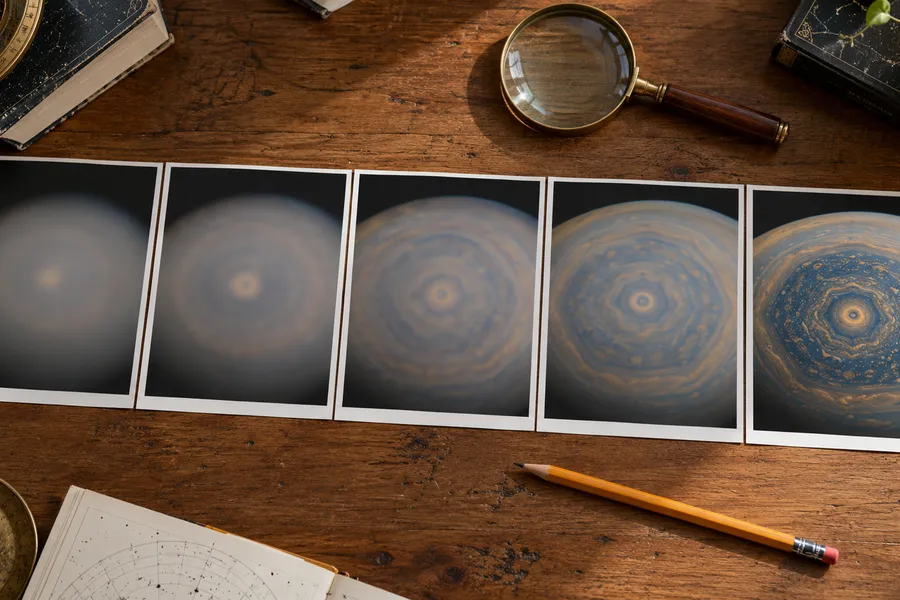
Scientists spent more than 35 years searching for a southern counterpart to Saturn's giant north-polar hexagon. They finally found one, but it is not a hexagon: it is a ten-sided wave that is becoming clearer before our eyes.
The second has been defined using the cesium atom since 1967. On October 13, an international conference in Versailles will begin charting the path toward what could replace it. On the same table: the end of the leap second and a common time scale for the Moon.