The Definition of a Second Is Preparing to Change, but No Clock Will Notice
The 28th CGPM in Versailles adopted all three time resolutions: a proposal for a new definition of the second is targeted for 2030, continuous UTC begins on May 20, 2027, and work on a common lunar time scale is now official. The first nuclear clocks were also announced the same week.
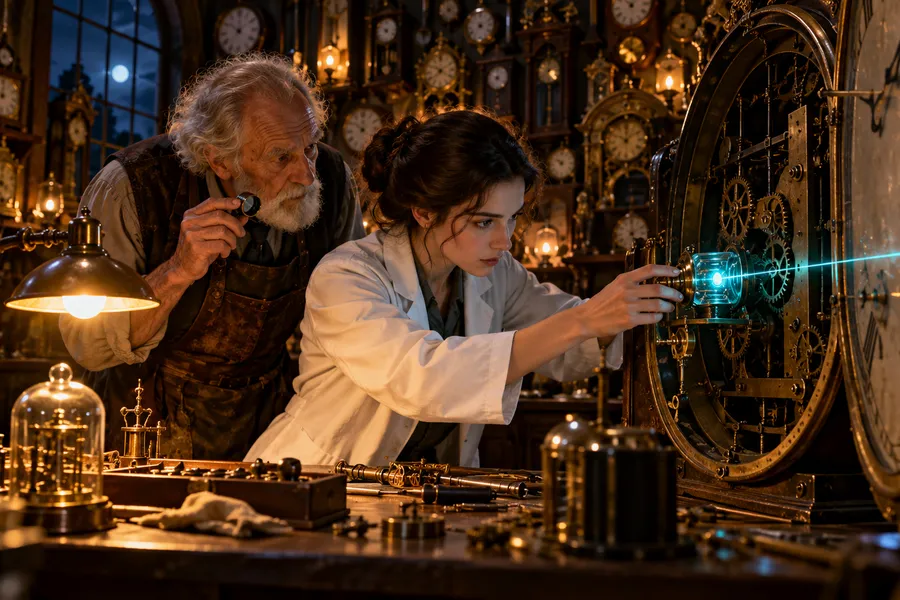
A second is a second. Or at least that is how we tend to think about it.
But the second we use today has a formal scientific definition, and that definition is tied to an atom: a specific transition frequency of the cesium-133 atom is fixed at exactly 9,192,631,770 hertz.
In everyday terms, one second is the amount of time it takes that radiation to oscillate 9,192,631,770 times.
This atomic foundation was first adopted in 1967, while its official wording in the modern SI system was updated in 2019. For more than half a century, it has underpinned everything from ordinary clocks to GPS satellites and internet timestamps.
Now, after all that time, the foundation is preparing to change.
The reason is simple: the best optical clocks have already surpassed the accuracy limits of cesium.
Three Time Decisions From Versailles
The General Conference on Weights and Measures, or CGPM, the highest international decision-making body for measurement units, held its 28th meeting in Versailles from October 13 to 15, 2026.
The conference meets every four to six years and is where the formal definitions of units such as the kilogram, metre and second are decided. The 2019 redefinition of the kilogram — which freed it from dependence on a physical metal cylinder stored near Paris and instead tied it to a fundamental constant of nature — came through the same process.
This year, three draft resolutions related to time were on the table. All three were adopted on October 15:
- Resolution 4: The future definition of the second
- Resolution 5: Making Coordinated Universal Time (UTC) continuous
- Resolution 6: An international reference time scale for the Moon and its traceability to UTC
The second itself did not change this week. But the road to 2030 is now official, and for the leap second, there is now a much more concrete date.
Why Isn’t Cesium Good Enough Anymore?
Atomic clocks work by counting the frequency of radiation associated with specific energy transitions inside atoms.
The higher the frequency of the transition, the more finely time can be divided.
Cesium clocks operate in the microwave region, counting a signal that oscillates roughly nine billion times per second.
The new generation of optical clocks uses atomic transitions at far higher optical frequencies. Here, the number of oscillations rises into the hundreds of trillions per second.
The result is dramatic: the best optical clocks are already around 100 times more accurate than the best cesium clocks.
The criteria set for redefining the second show just how large that gap has become.
Before the second can be redefined, optical clocks must demonstrate performance accurate enough to lose less than one second over roughly 16 billion years.
The universe itself is only about 13.8 billion years old.
The Race Isn’t Over Yet
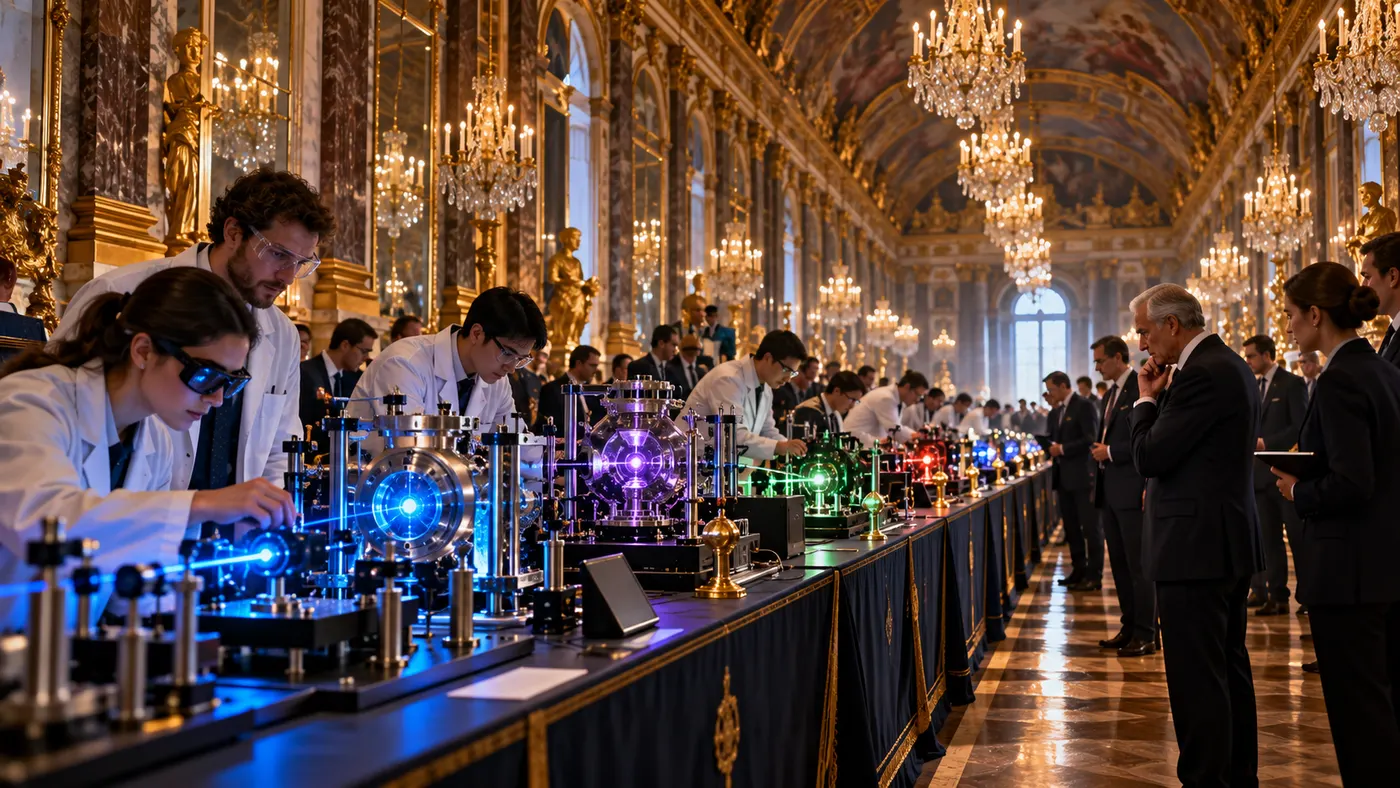
The difficult question is what exactly should replace cesium. In 1967, the choice was essentially singular. Today, it is not. Laboratories around the world are developing optical clocks based on different atoms and ions, including strontium, ytterbium, aluminium and lutetium. Each has its own strengths.
The latest reminder of how competitive the field has become came from Singapore. A team at the National University of Singapore reported an uncertainty at the level of 10⁻¹⁹ for a clock based on lutetium-176 ions in a paper published in Nature on September 23. That makes it the most precise clock reported so far. In theory, a clock performing at that level would take more than 260 billion years to accumulate an error of one second.
Two basic options are still on the table. The first is to tie the second to the frequency of a single optical atomic transition. The second is to use, as the new fixed constant, a weighted geometric mean calculated from the frequencies of a defined group of optical transitions. In other words, the question of which atom will win has not been answered yet.
Resolution 4, adopted on October 15, did not change that. The CGPM called for the work to continue and for the international community to reach consensus on the new definition. Some mandatory criteria have not yet been met; one of them is regular contributions from optical frequency standards to the calibration of International Atomic Time. Even so, the goal is to submit a proposal for the new definition of the second for adoption at the 29th CGPM in 2030. Whether it is adopted then will depend on those criteria being completed and on international consensus.
The Next Step: The Atomic Nucleus
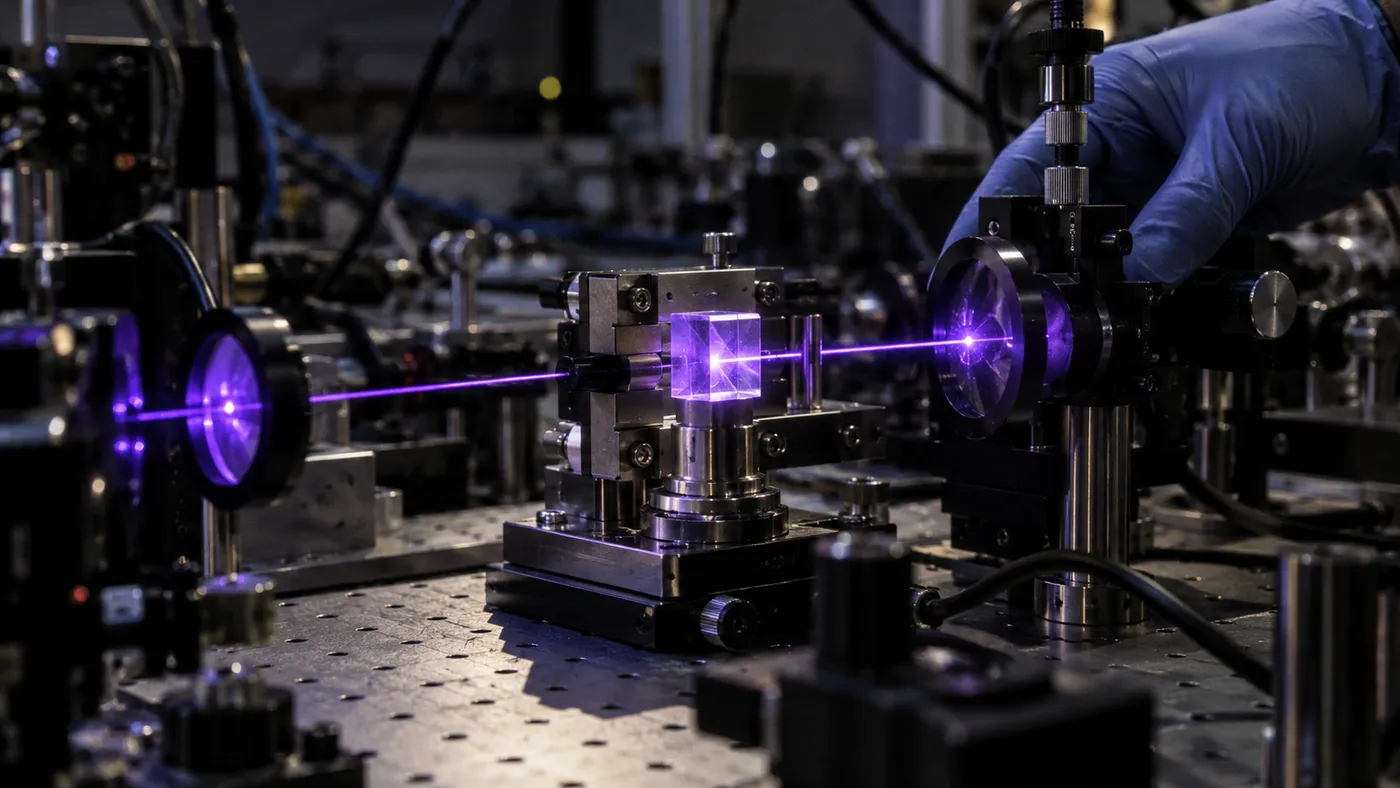
While optical clocks prepare to replace cesium, the first examples of the generation after them have also appeared. On October 7, Nature published two independent studies, one from a team in Vienna and the other from Tsinghua University in Beijing. Both teams announced the world's first working "nuclear clocks."
Every atomic clock so far, whether cesium or optical, counts energy transitions of the electrons orbiting the atom's nucleus. Nuclear clocks instead use an energy transition inside the nucleus itself. The nucleus is far smaller than the electron cloud and much better shielded from outside influences, which raises hopes that nuclear clocks could eventually become extremely stable and even portable.
The problem is that triggering energy transitions in nuclei normally takes far more energy than lasers can deliver. A rare isotope called thorium-229 is almost the only exception: the transition in its nucleus is low-energy enough to be excited with an ultraviolet laser. Physicists chased this idea for decades; the transition was directly excited with a laser for the first time in 2024.
Both teams embedded thorium-229 in calcium fluoride crystals and locked ultraviolet lasers to this nuclear transition. The Vienna team's clock ran unattended for more than 24 hours, while the Beijing team achieved a clock that was more stable over short periods and produced crystals using only 1.4 micrograms of the extremely rare thorium-229.
These are still early prototypes. They are not yet as accurate as the best optical clocks, and they are not competing with optical clocks in the new definition being prepared for 2030. But the shift from cesium to optical clocks once started the same way. Perhaps one day, the next definition of the second will rest not on the atom's electrons but directly on its nucleus.
No One Will Notice

Here is the strangest part of the story:
When the second is eventually redefined, no wristwatch, phone or kitchen clock will suddenly behave differently.
The new definition will be calibrated so that the duration of one second remains the same as before.
What changes is not the length of the second, but how precisely we can realize and measure it.
So why go through all this trouble?
Because large parts of the modern world depend on timing differences far smaller than a billionth of a second.
The position shown on your phone depends on precisely synchronized clocks aboard GPS satellites.
Financial markets use timestamps measured in microseconds to establish the order of transactions.
Internet infrastructure and security systems also depend on clocks staying closely synchronized.
Optical clocks are so sensitive that they can measure something else as well:
gravity.
According to Einstein’s general theory of relativity, time passes more slowly in stronger gravitational fields.
The best optical clocks are now sensitive enough to detect the difference in the passage of time caused by a height difference of roughly one centimetre.
A clock, in other words, is becoming a kind of altitude sensor.
The Leap Second Now Has an End Date
The new definition of the second will have to wait until 2030 at the earliest. For the leap second, however, the decision is already far more concrete.
Earth does not rotate at a perfectly constant rate. Sometimes it slows slightly; sometimes it speeds up. As the difference between atomic clocks and UT1, the time scale based on Earth's rotation, grew, an extra leap second has occasionally been added to UTC since 1972. Those moments when a minute lasts 61 seconds can be a serious problem for software and infrastructure that depend on precise time synchronization.
Resolution 5, adopted on October 15, set the new rule for making UTC continuous. Continuous UTC will take effect on May 20, 2027. The allowed long-term difference between UTC and UT1 is being raised to one hour, or 3,600 seconds.
According to the BIPM's post-conference statement, this framework is expected to eliminate leap-second discontinuities and keep UTC continuous for several centuries. One reason for speeding up the decision was the possibility that Earth's recent rotation behaviour could, for the first time, require a negative leap second, something that has never been tried before.
The Moon Needs Its Own Clock
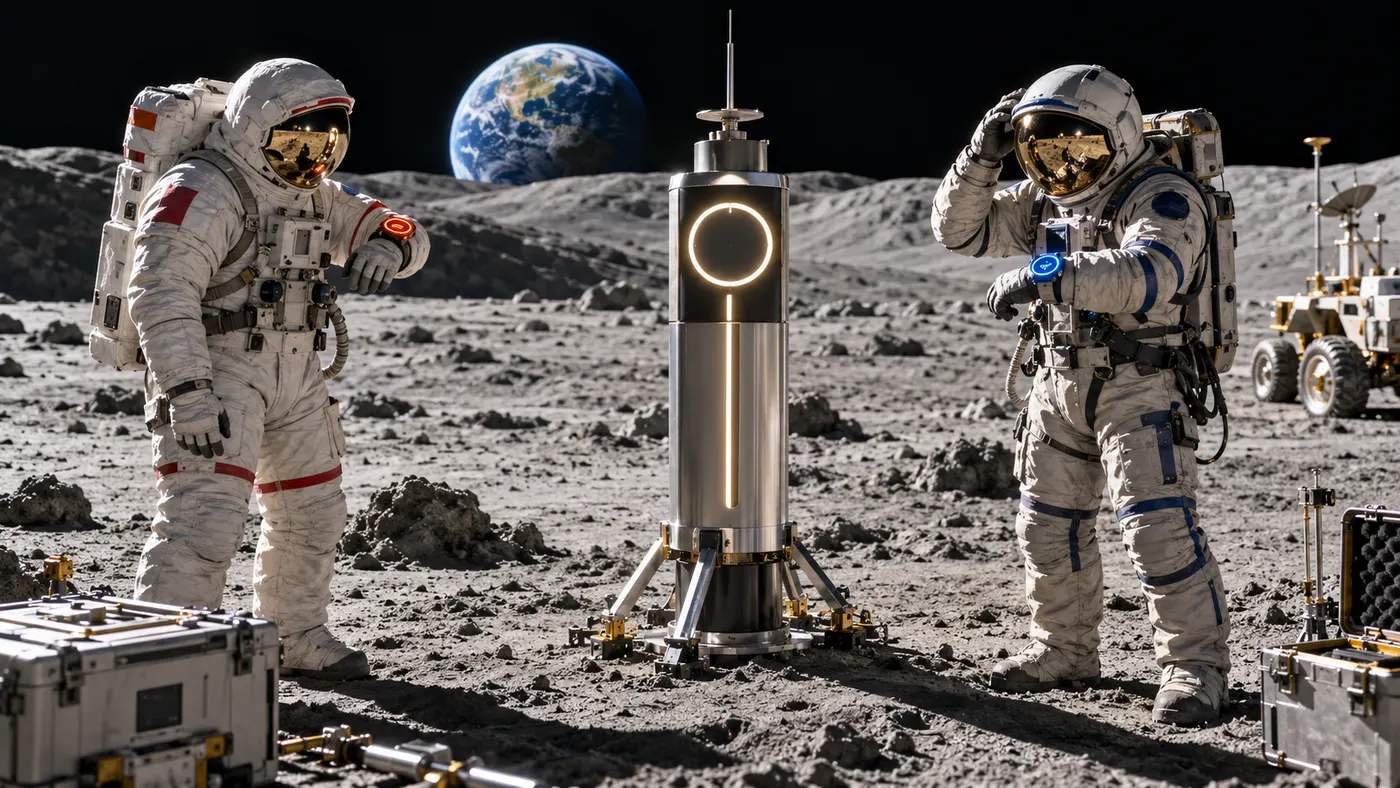
The third resolution sounds like science fiction, but the problem is entirely practical. Relativity matters here too: because gravity is weaker on the Moon, a clock on the lunar surface runs, on average, about 56 microseconds per day faster than a clock on Earth. That sounds trivial, but for spacecraft landing on the Moon, navigating its surface and communicating with one another, that difference is unacceptable. A shared time scale is needed so that every country going to the Moon does not use its own clock.
Resolution 6, adopted on October 15, formalizes work toward a single, internationally recognized reference time scale for the Moon. It encourages space agencies to share experience from pioneering lunar missions and to work out together how lunar time should be accurately linked to UTC and how relativistic effects and uncertainties should be handled.
The resolution does not yet set a finished standard saying "time on the Moon will be measured this way." But the goal is clear: to develop a single, consistent international approach traceable to UTC before competing lunar time scales emerge.
That is why the outcome in Versailles moves at two different speeds. The second itself has not changed; the aim is to submit a proposal for the new definition at the 2030 conference. Continuous UTC, which will end the leap second, now has a date: May 20, 2027. Lunar time, meanwhile, has formally joined the international metrology agenda as the third major topic.
TagsSpace