
Google Can Now Turn Your Sentences Into Games. Has the Era of AI Game Development Really Begun?
Google's Playground lets you make a game by describing it, and it will later connect to Unity Spark. But Unity's CEO warned the same day: this is not about one-shotting a game. The gap between a game that works and a good game is still human.
What does Playground do?
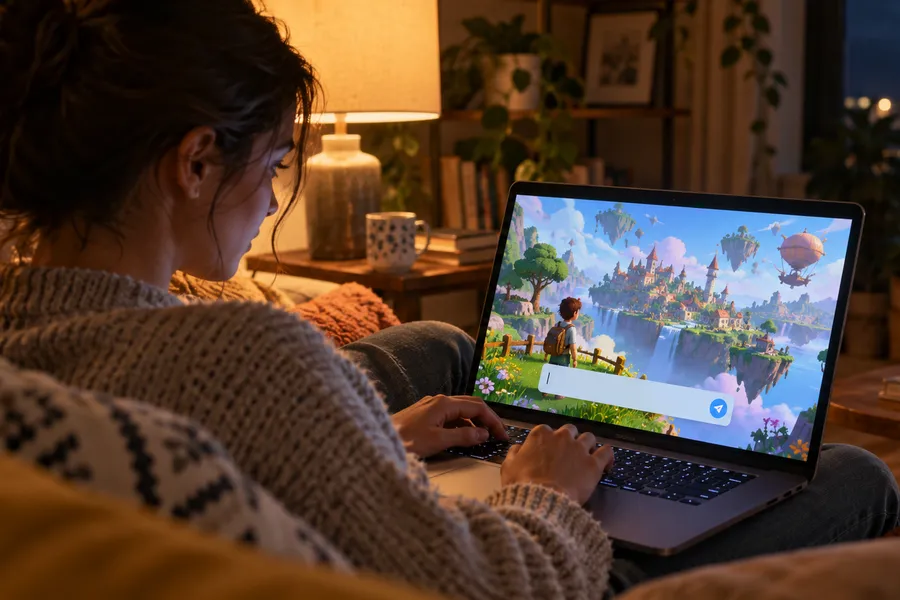
Google launched Playground, an experimental game platform, on October 7. The idea is simple: you describe the kind of game you want as if you were having a conversation, and Playground turns it into something playable. You can start from a blank page, modify example ideas, or follow step-by-step guidance.
More importantly, the game does not have to stay the way it was first generated. If you want to change the physics, rewrite the rules, customize the characters, or rebuild the environment, you can simply describe what you want again. In Google's words, you remain in creative control from the rough idea all the way to the finished experience.
Because the games run in a browser, they can be played on both phones and computers. You can keep your game private, share it with friends through a link, or publish it in a public gallery. Some types of games also support multiplayer and leaderboards. Every published game is checked against Google's community guidelines before it goes live.
For now, there is one major limitation: Playground is only available to users aged 18 and over in the United States, so it cannot yet be used from Türkiye. Browsing and playing games is free. Game creation, however, is limited through a weekly usage allowance: free users receive a smaller amount of generation capacity, while subscribers to Google's AI plans get higher limits.
Unity Spark: One step further
The second half of the announcement may be even more important. Google said it plans to integrate Playground with Unity Spark in the future.
Unity is one of the most widely used game engines in the world, powering everything from mobile games to independent productions. Unity Spark, meanwhile, is a new browser-based game creation tool being built from the ground up by Unity, with the goal of requiring no previous game development experience.
According to Google, Spark will bring professional-grade game mechanics, high-quality 3D capabilities, and the flexibility of the Unity engine to Playground. Spark will also connect to Unity's asset marketplace, allowing creators to work with thousands of community-made characters, models, and visual assets.
The idea is that a game which begins with a simple sentence could eventually grow into something built within Unity's more advanced game development ecosystem. Unity Spark is currently being tested; a closed beta is expected to begin soon, with a broader experience planned for later in 2026.
"This isn't about one-shotting a game"
Unity CEO Matt Bromberg drew an interesting line in a post published on the day of the announcement. According to him, Spark is not meant to be a tool where you give AI a single command and receive a finished game.
Bromberg argues that asking AI to reproduce something that already exists does not turn anyone into a famous game designer — just as typing the opening paragraph of War and Peace into a computer does not make someone Tolstoy.
He is also clear about who Spark is meant for: players who have spent thousands of hours in a genre and know exactly what is missing from it, artists who have an idea they want to bring to life but do not know how to code, and modders who are ready to create something entirely new.
One number in his post sums up the situation particularly well. Around 3 billion people play games made with Unity every month, yet almost none of them have ever made a game themselves. In Bromberg's view, games may be the last major form of entertainment that almost everyone consumes but almost no one creates.
This isn't the first attempt
The idea of opening game development to everyone is not new. RPG Maker has allowed amateurs to build role-playing games for years. Super Mario Maker turned millions of players into level designers. PlayStation's Dreams let people create almost any kind of game directly on a console. Roblox, meanwhile, built an entire economy around games made by its users.
For a long time, all of these tools had something in common: before you could make anything, you first had to learn the tool itself. AI has started lowering that barrier — but Playground is not the first platform to try.
Roblox had already begun generating playable games from natural-language descriptions with Build, a tool it announced in July. According to Roblox, around 9,000 games have already been published using Build, and 71 percent of the people using it had never previously used Roblox's development tools.
What makes Google's approach different is not that it came first. It is the plan to begin with an independent game platform and eventually connect it to Unity's professional game engine ecosystem. In other words, a game that starts with a single sentence could have a path toward growing with the same kinds of tools used by industry professionals.
What happens when there are too many games?
Once the door opens to everyone, the first question is obvious: what happens to the quality — and the sheer number — of games being produced?

Thousands of games are already released on Steam every year, and even genuinely good ones are finding it increasingly difficult to get noticed. In a world where a game can be created from a sentence, the number of repetitive, low-effort AI-generated games could explode.
For now, Google's answer is its gallery system, which highlights games based on player ratings and play counts. But we still do not know how well a system like that will work at a much larger scale.
That is also why Bromberg's emphasis on this not being about "one-shotting" games matters. Whether AI becomes a genuinely creative tool or simply an unlimited content machine will depend largely on who uses it — and how.
The story of the SFO: Grimhammer mod that we previously covered on the site is one example. In that case, AI was not used to create something new, but to copy someone else's work.
Can everyone make a game?
Maybe that is the real question.

Playground makes the technical side of game development easier, but a good game is not merely a technical achievement. Roblox's own evaluation illustrates this surprisingly well: one example game created with Build scored 98 out of 100 for engineering quality and a perfect 100 in playability testing — but only 31 for game design and content depth.
In other words, AI can make a game that works. That does not automatically mean it can make a good game.
Understanding why a mechanic is fun, when a level starts to become boring, or when a story actually works comes from years of playing, creating, and thinking about games.
Bromberg ends in much the same place: trying to make your own game will probably only increase your respect for the people who do it at the highest level.
So Playground is not going to turn everyone into a game designer overnight. But for millions of people who have carried a game idea in their heads for years without ever having a way to bring it to life, it may finally offer a starting point.
What happens after that will depend less on the idea itself than on what someone is able to do with it.