

Nikon Disqualified the Winner of Its Microscopy Competition Over AI. But the Line Isn't as Clear as It Seems
The 2026 winner of Nikon Small World in Motion was disqualified after traces of AI were found in the video. The researcher says AI only processed real data. The real question: at what point does an image stop being an observation?
What happened?
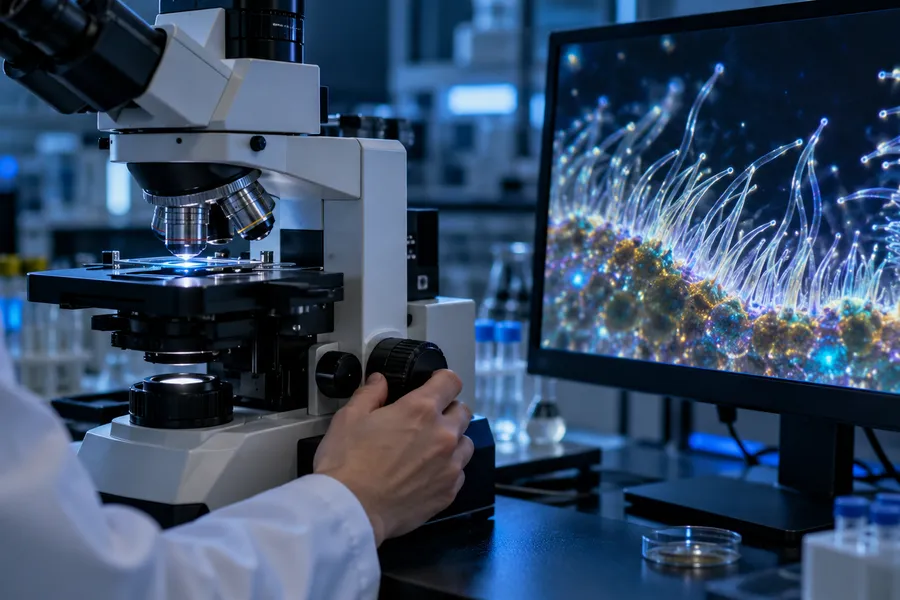
Nikon's Small World in Motion competition has been rewarding some of the most striking videos captured under a microscope since 2011. Combining scientific and artistic merit, the competition was held for the 16th time this year.
The 2026 winner was announced in mid-September: Dr. Ning Xu of Tsinghua University in Beijing, whose video showed the movement of cilia, the tiny hair-like structures found in the airways. According to Nikon's announcement, the footage showed abnormal ciliary movement in the airways of a child with an inherited disorder that affects how these structures move.
But not long afterward, some scientists began questioning whether the motion shown in the video accurately represented how cilia actually move.
The controversy grew when a medical student in the United States said that after uploading the video to Google's AI tools, they detected SynthID, an invisible digital watermark indicating that at least part of the video had been created or edited using Google's AI systems.
That distinction matters. The watermark shows that AI touched the image, but by itself it does not reveal how extensive that intervention was.
Nikon first announced that it was reviewing the winning entry. Then, on October 9, it issued its decision: the video did not comply with the competition's rules on generative AI and was disqualified.
First place was subsequently awarded to Vietnam's Nguyen Nam Nhat for a video showing the interaction between a worm and a single-celled organism.
What does the researcher say?
What makes the story interesting is that Dr. Xu never denied using artificial intelligence. But his explanation of how it was used gives the controversy an entirely different dimension.
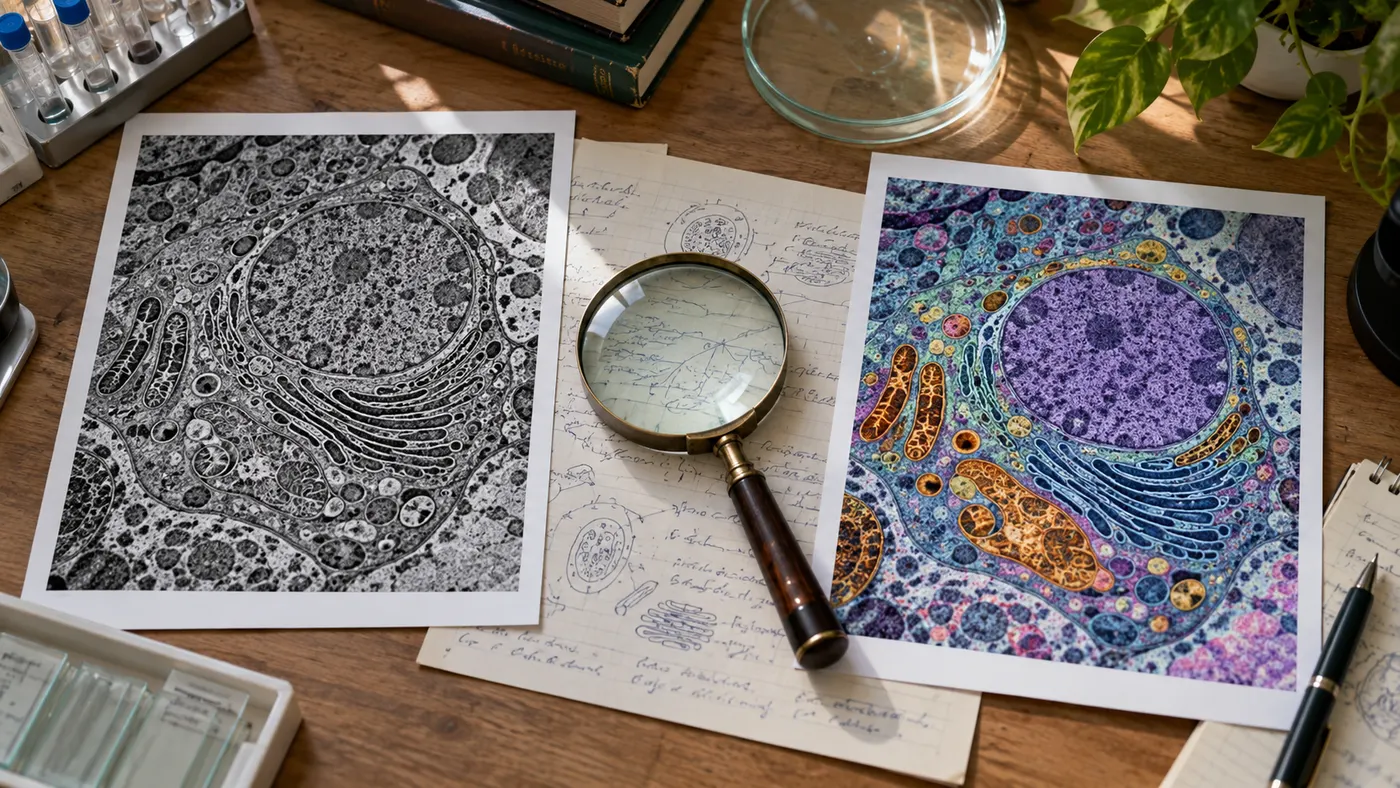
According to Xu, the experimental recording itself was real, as were the cilia and their movement. All of it originated from data recorded by the microscope.
He said AI was only used afterward to distinguish different structures in reconstructed grayscale images and to add color. In his view, this was not a "generated" video, but real experimental data that had been processed with AI.
Xu later openly described his use of artificial intelligence. Nikon also updated its description of his work after the controversy began, noting that the imagery had been "AI-assisted in post-processing."
The competition rule, meanwhile, was short and clear: AI-generated videos were not permitted.
Nikon emphasized that its decision was not intended as a judgment on Xu's reputation, scientific contributions or intentions. But it also acknowledged that the case highlighted a need to reconsider the competition's rules and evaluation procedures in the future.
The real question: Where does processing end and generation begin?
Reducing this story to "someone used AI and got caught" misses the larger issue.
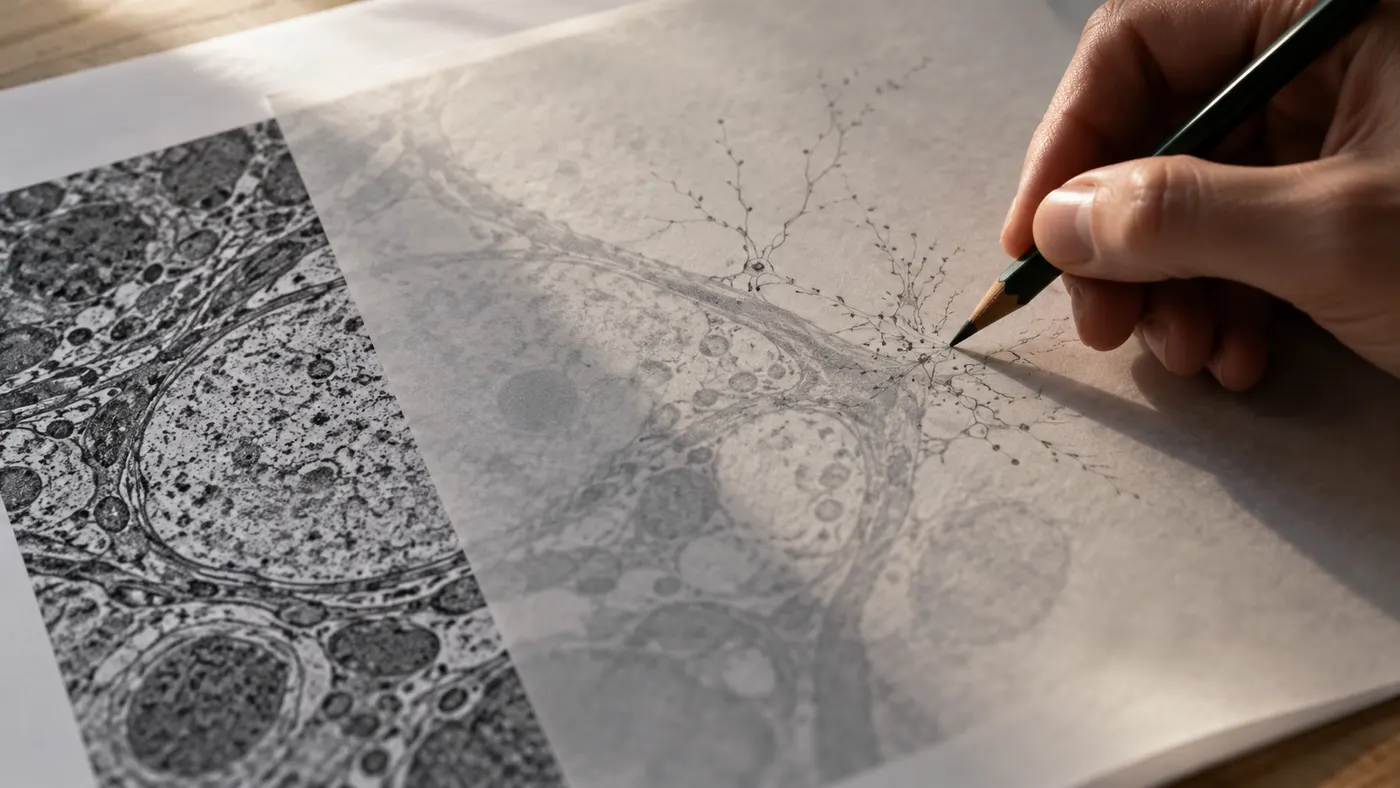
Microscopy images are almost never published exactly as they come out of the instrument. Scientists reduce noise, mathematically correct blur and use color to distinguish different structures. These are all standard scientific tools, and in many cases they are essential for making the results understandable.
In recent years, a growing share of these processes has begun to rely on AI-based methods.
Nikon's own competition information reflects that reality. Various computational microscopy techniques, including deconvolution, are permitted. And traditional methods are not flawless either: they can introduce artifacts that were not actually present in the original image.
Learning-based AI models, however, introduce a different kind of risk.
When the available data is insufficient, these models can estimate missing details based on patterns they have learned. That estimate can result in details appearing in the image that the microscope itself never actually recorded.
The boundary between processing an image and rewriting it can therefore become visible only to someone who understands exactly how the tool being used works.
Nikon's rule simply states that "AI-generated videos are not permitted." Intermediate cases such as AI-based denoising, segmentation or image reconstruction are not separately defined.
And that is part of the problem.
This issue exists regardless of whether Xu acted in good faith. If someone examining an image cannot tell whether the movement they are seeing was actually recorded by the microscope or represents what a model believes should have been there, the image begins to shift from an observation into an interpretation.
And science depends heavily on that distinction.
This is not the first time
Photography competitions have been dealing with the AI problem for several years.

In 2023, Boris Eldagsen won the Creative Open category of the Sony World Photography Awards with an image created using artificial intelligence. He later declined the award in an attempt to provoke a discussion about whether photography competitions were prepared for AI.
This year, a finalist in the Hasselblad Masters competition was also removed after being found to have used generative AI.
But Nikon's competition occupies a different position.
In an art competition, the debate around AI largely concerns creativity, authorship and human effort. In a scientific imaging competition, the question is reality itself: Did what we are looking at actually exist in nature in this form?
What is particularly interesting is that the controversy was not initially uncovered by an AI detection tool, but by scientists themselves.
Experts who knew how cilia were supposed to move noticed that something in the video looked "wrong." The watermark came later as an additional technical signal.
For now, one of the strongest defenses against AI-generated imagery may still be the careful eye of someone who genuinely understands the subject.
We previously covered the story of a media company that attached fabricated expert authors to AI-generated content. In that case, the core problem was not artificial intelligence itself, but the false sense of credibility presented to readers.
The Nikon story is a subtler version of the same problem.
There may be no fake author here, and there may have been no malicious intent. But once AI touches an image, determining exactly what that image represents becomes increasingly difficult.
Science will now have to decide, through explicit rules, where that intervention should stop.
TagsAI
Related posts
All postsThe AI Content Empire Collapsed: The Real Problem Wasn't AI, It Was Fake Authors
Google Can Now Turn Your Sentences Into Games. Has the Era of AI Game Development Really Begun?
The Winner of the Memory Crisis Is Clear: Samsung Expects $80 Billion in Operating Profit in Three Months. Its Mobile Division Is Losing Money