
Orionid Meteor Shower Guide: How to Watch Halley's Comet Dust from Türkiye
The Orionids peak on the night of October 21–22, but a bright Moon makes timing matter. When, where and how to watch, plus the Draconids on the evening of October 8, step by step.
What are the Orionids?
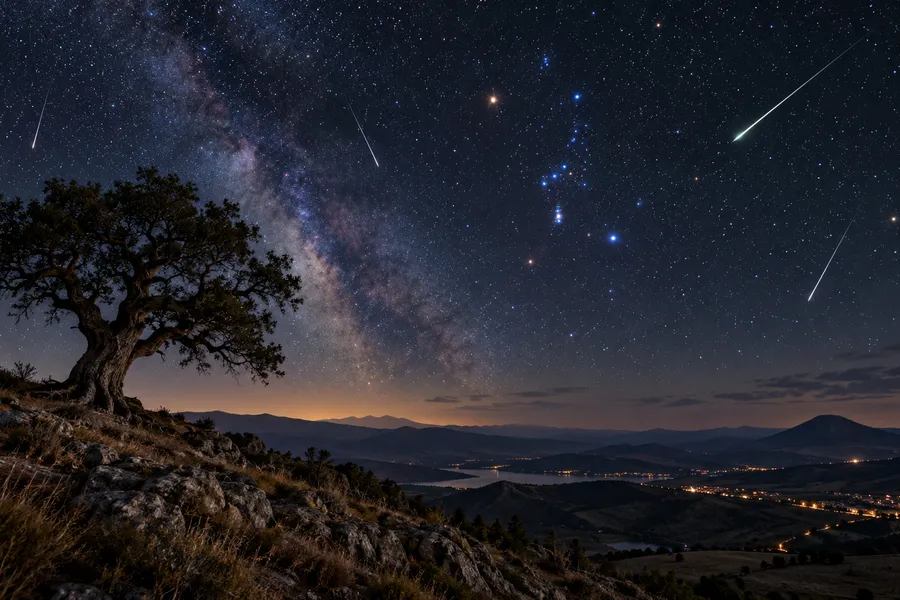
Halley's Comet takes about 75–76 years to orbit the Sun. Each time it passes through the inner Solar System, it leaves dust and small rocky particles along its orbit. Every October, Earth passes through this debris stream, and the particles enter the atmosphere at around 66 kilometers per second, burning up and creating brief streaks of light across the sky. These are what we commonly call "shooting stars."
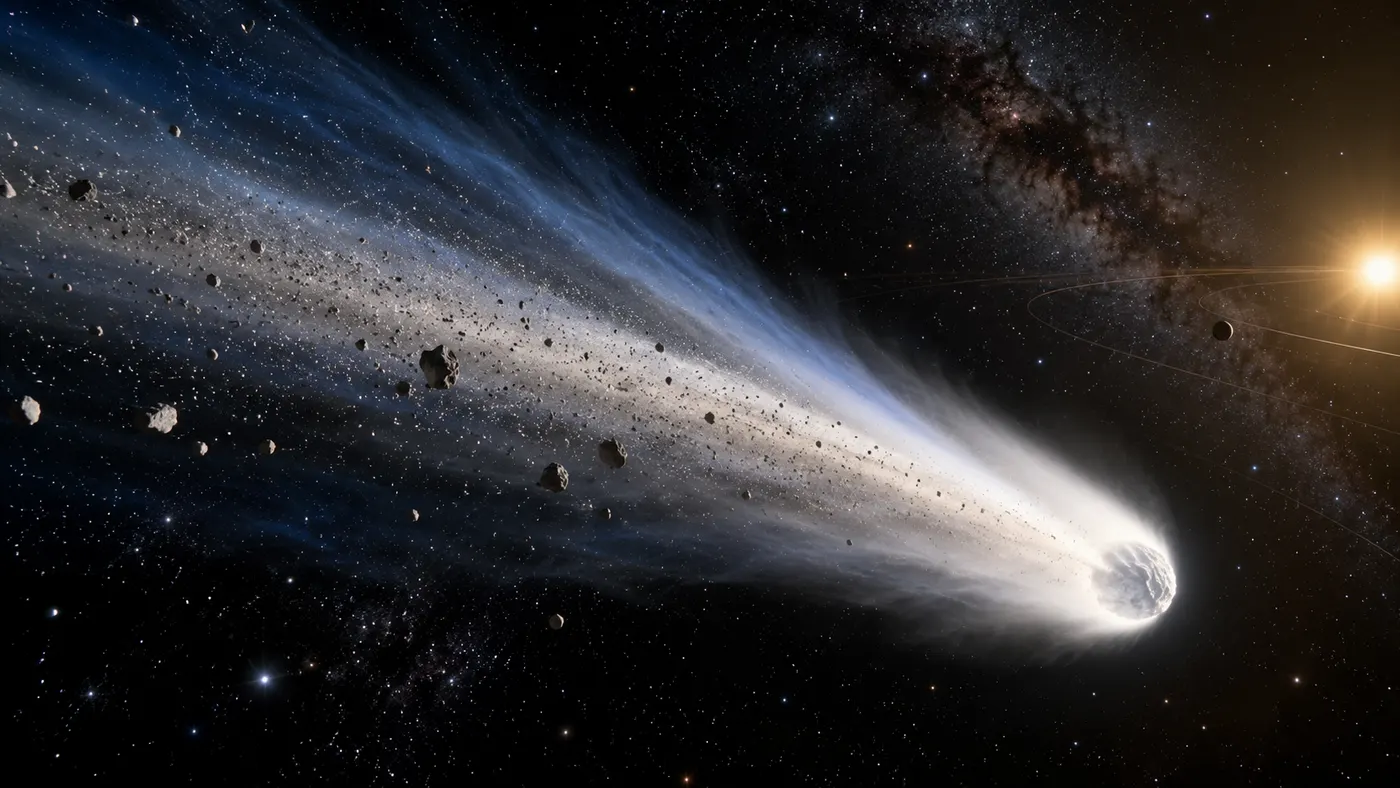
The shower is called the Orionids because the meteors appear to radiate from the region of the sky occupied by the constellation Orion. This point is known as the "radiant." Meteors can actually appear anywhere in the sky, but if you trace the path of an Orionid meteor backward, it will lead toward the radiant near Orion.
When is it this year?
- Active period: October 2 – November 7
- Peak: The night of October 21 into October 22
- Expected rate: Around 20 meteors per hour under dark skies
Although the peak is often described as a single night, the Orionids have a broad maximum, and activity remains relatively high for about a week. The nights of October 20–21 and October 22–23 are also worth trying. If clouds spoil the peak night, it does not mean you have missed the shower entirely.
Twenty meteors per hour may sound like a lot, but that figure assumes an ideal, moonless sky far from light pollution. In practice, the number you see will depend heavily on how dark your location is and will usually be lower. In some exceptional years, Orionid rates have risen to around 50–75 meteors per hour, but such outbursts cannot be predicted reliably in advance.
This year's problem: the Moon
In 2026, the peak falls only a few days before the full Moon. On the peak night, the Moon will be in a bright waxing gibbous phase, with more than three quarters of its disk illuminated. That is bright enough to wash out many of the fainter meteors.
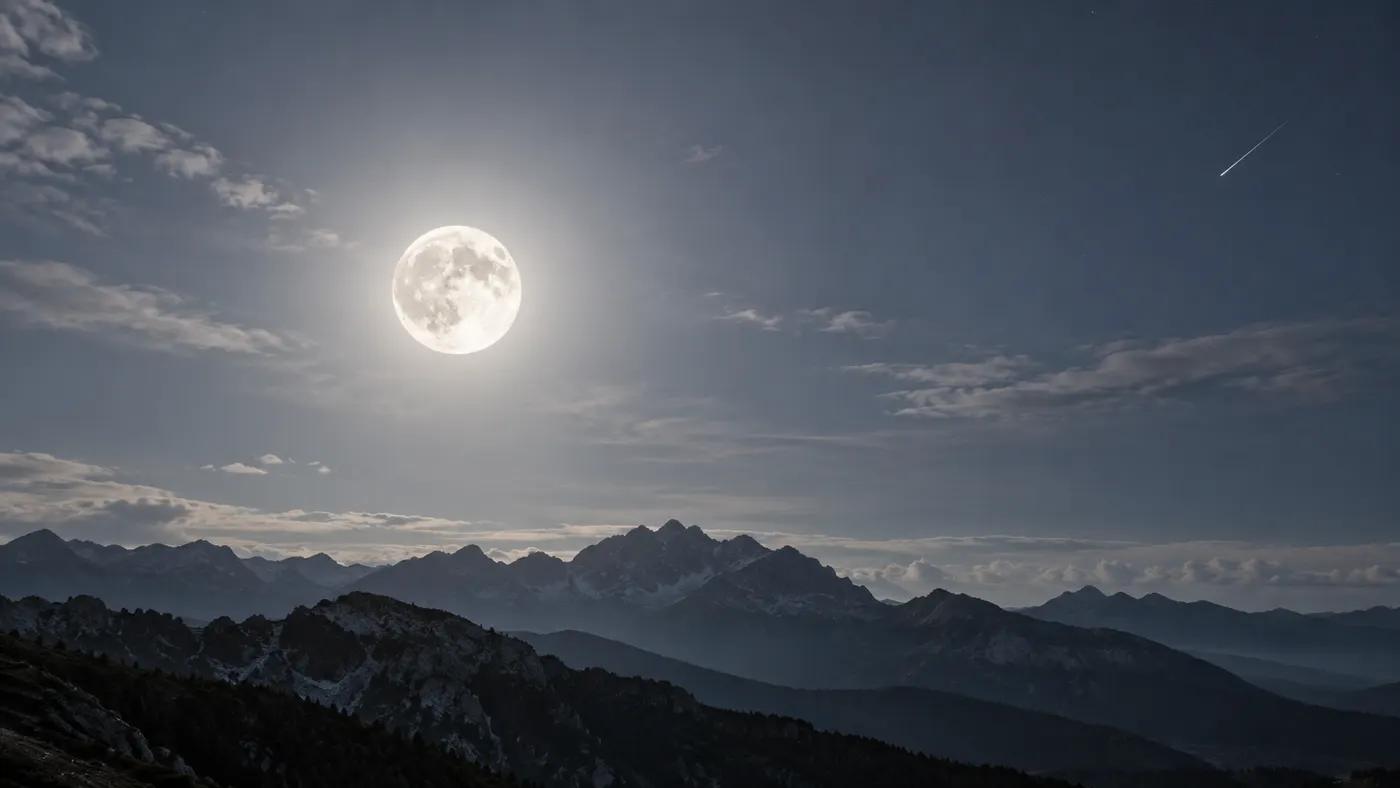
The good news is that the Moon sets after midnight. From Türkiye, moonset will be around 3 a.m., though the exact time varies depending on your city. Once the Moon has set, the sky will remain dark until dawn begins.
So the golden rule this year is: watch after the Moon sets and before dawn begins. In western and central Türkiye, that roughly means a window between 3 a.m. and 5:30–6 a.m. Farther east, both moonset and dawn occur earlier, so it is worth checking the exact times for your location. By then, Orion will also be well above the horizon; the higher the radiant is in the sky, the more meteors you are likely to see.
How to watch
Get away from city lights. The Moon is not the only enemy of meteor watching; city lights are just as important. From a city center, you may see only the brightest few meteors. Traveling a few dozen kilometers away from urban lighting can noticeably increase the number you see. A high, open location with an unobstructed horizon is ideal.
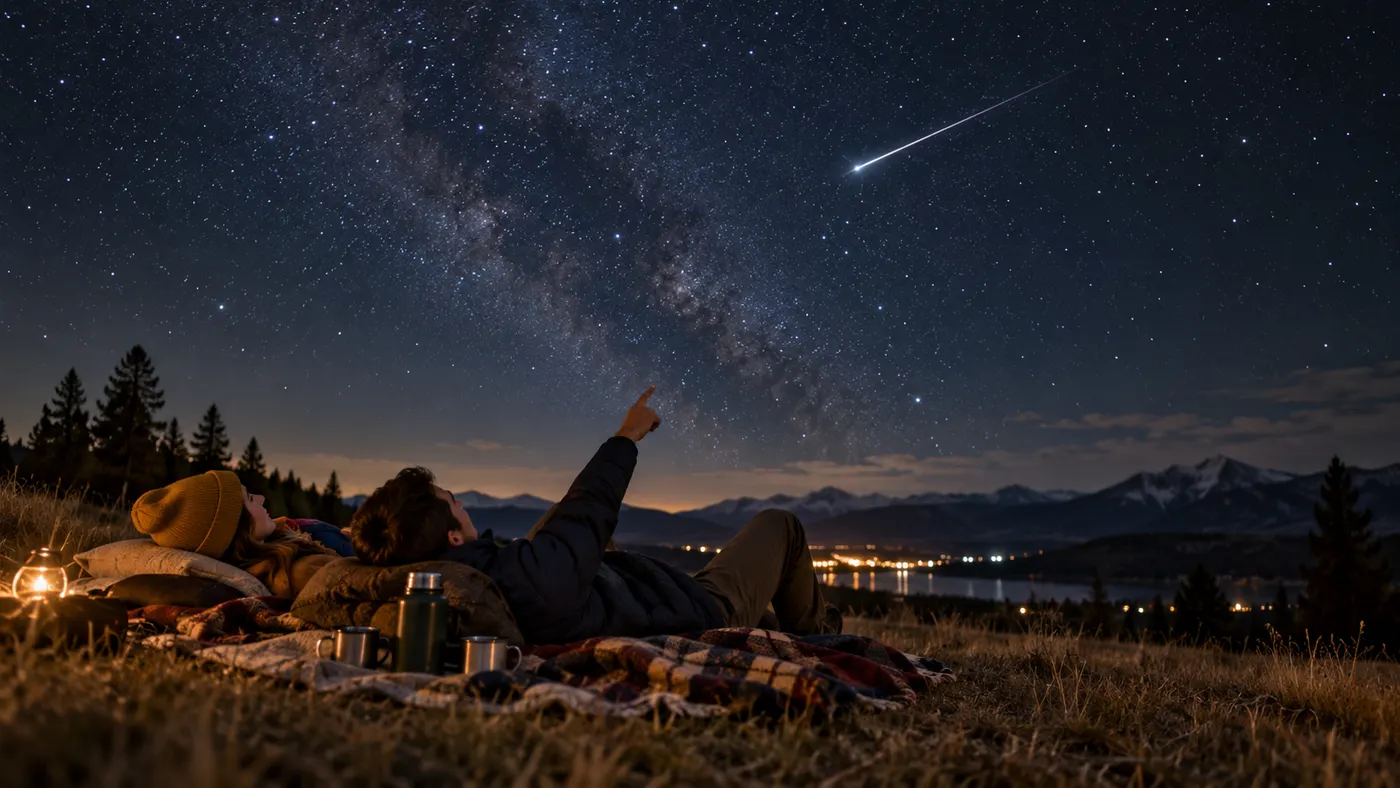
Let your eyes adjust to the dark. Full dark adaptation takes about 20–30 minutes. During that time, avoid looking at your phone screen, since bright light will reset your night vision. If you need to use your phone, turn the brightness all the way down or enable a night mode.
Do not look directly at Orion. Although the meteors appear to radiate from the radiant, the longest trails are often seen some distance away from it. Look toward a broad area of sky beside Orion or closer to directly overhead.
Do not use a telescope or binoculars. Meteors can appear anywhere in the sky and vanish in an instant. A telescope narrows your field of view; the best tool is the naked eye.
Be patient and stay comfortable. Meteors do not arrive at regular intervals. You might see nothing for several minutes, then catch two or three in quick succession. Give yourself at least an hour. October nights, especially at higher elevations, can be much colder than expected, so a blanket, a thick jacket, and a hot drink can make the experience much more enjoyable. Lying down also helps prevent neck strain.
If you want to take photos, a phone with a long-exposure or manual shooting mode may be able to capture the brightest meteors if you keep it completely steady. Standard night modes often combine several frames, so they may not record a brief meteor trail cleanly. For the best results, use a camera fixed on a stable surface and set for long exposures. Seeing a meteor is much easier than photographing one, so enjoy the sky first.
Another opportunity this week: the Draconid meteor shower
While you wait for the Orionids, there is another shower worth watching. The calculated peak of the Draconids occurs in the early hours of October 9, but the best time to observe them is after darkness falls on the evening of October 8. This year, the sky will also be free of moonlight. One of the most interesting things about the Draconids is that, unlike most meteor showers, they are often best seen in the early evening rather than after midnight. They are usually a modest shower producing only a few meteors per hour, but unexpected outbursts have occurred in some years. It is a good excuse to spend some time watching the northern sky after sunset.

Another visitor in the sky: Saturn
If you are outside watching meteors and notice a bright, steady, yellowish point of light that does not twinkle much, there is a good chance it is Saturn. The planet reached opposition on October 4 and is currently near its brightest for the year. You will not be able to see the newly forming ten-sided atmospheric wave around its south pole, but with a small telescope you may be able to make out its rings.
You will have to wait until 2061 to see Halley's Comet itself again. But every Orionid streak is a tiny fragment of material that the comet left behind centuries ago. When you watch one of these "shooting stars," you are effectively seeing a small piece of Halley burn through Earth's atmosphere.
TagsSpace