
Spotted on Instagram, Found by Satellite, Discovered at Midnight: A New Giant Waterlily Species
An ordinary Instagram photo, satellite imagery and a midnight boat trip with 10 hours left before a flight gave science a new giant waterlily species: Victoria colombiana. But there may be only 30 to 50 left in the wild.
A waterlily in the wrong place
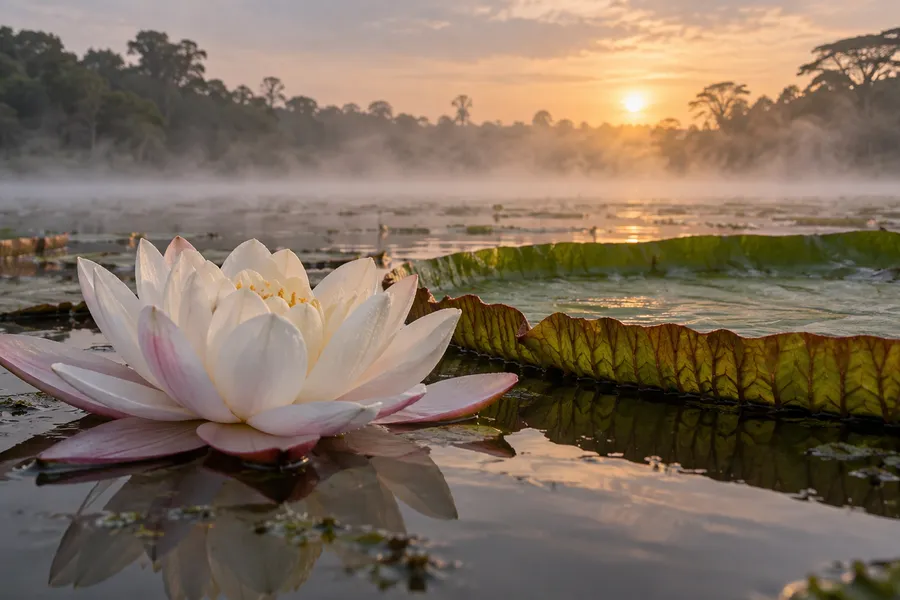
Waterlilies of the genus Victoria are giants of the plant world. Their leaves are so large and sturdy that those of some species can support the weight of a child. Until recently, three species were widely recognized in this genus, which inhabits the tropical waters of South America. The new study, however, recognizes not only the newly discovered Colombian species but also Victoria mattogrossensis from South America's Pantanal wetlands as a distinct species, bringing the number of accepted Victoria species to five.
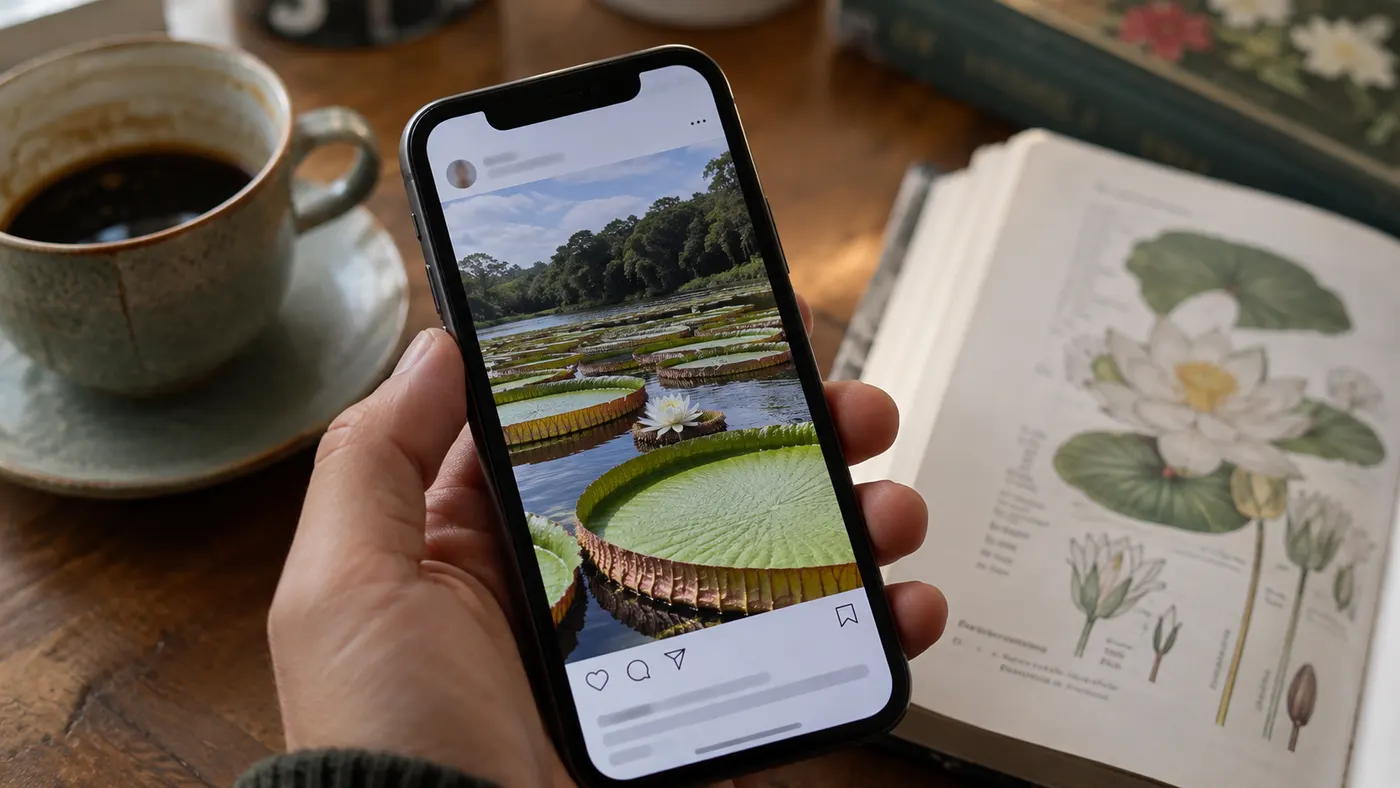
Around five years ago, Jeremiah Harris, who runs a carnivorous plant nursery in the United States, photographed giant waterlilies during a trip to Colombia's Inírida region and shared the images on Instagram. Harris assumed they belonged to a widespread species commonly known as the Amazon waterlily. He would later become one of the co-authors of the study.
One of the people who saw the photos was Carlos Magdalena, a researcher at the Royal Botanic Gardens, Kew in London and one of the world's leading waterlily experts. One detail immediately caught his attention: none of the known Victoria species had a natural range extending into the Inírida River, near the headwaters of the Orinoco River.
Either the plants had somehow been introduced there, or they belonged to a species science had never seen before.
A plant visible from space
To investigate his suspicion, Magdalena turned to an unusual method: he began scanning satellite images of the Inírida River and the surrounding lakes.
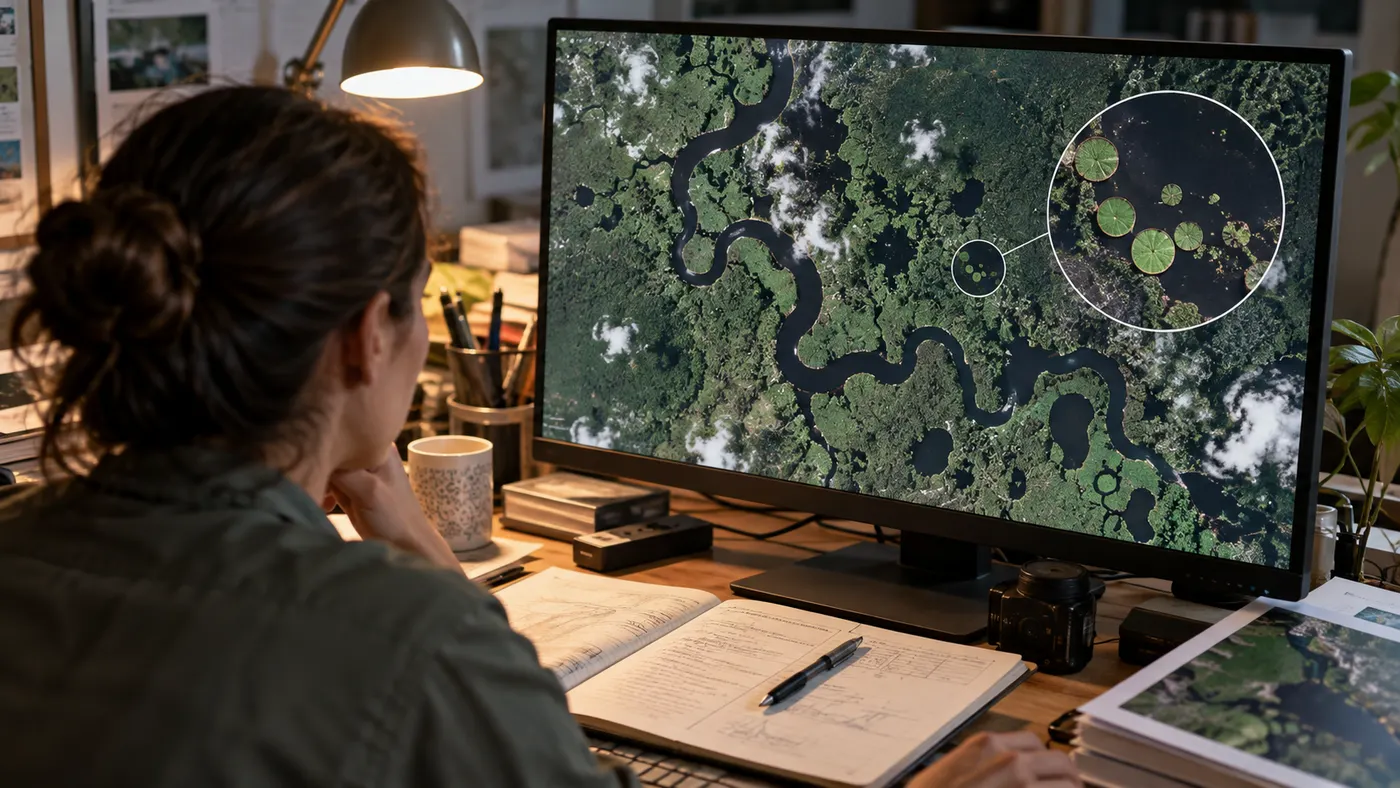
Eventually, he found what he was looking for. Several enormous leaves belonging to a single plant were clearly visible in the satellite imagery. Harris also confirmed that the plants local guides had shown him matched those visible on the map.
As plant taxonomist Maarten Christenhusz, one of the researchers involved in the study, put it, the waterlily can even be seen from space — a striking reminder of how little we still know about life on our own planet.
But satellite imagery is not enough to formally describe a plant as a new species. Researchers need to visit the site, examine the plant in person and, most importantly, collect a flowering specimen. Flowers are among the most important features botanists use to distinguish one species from another.
The final night
Magdalena planned an expedition with Mauricio Bernal of the Bogotá Botanical Garden and members of Indigenous communities in the region. Preparations took around two years.
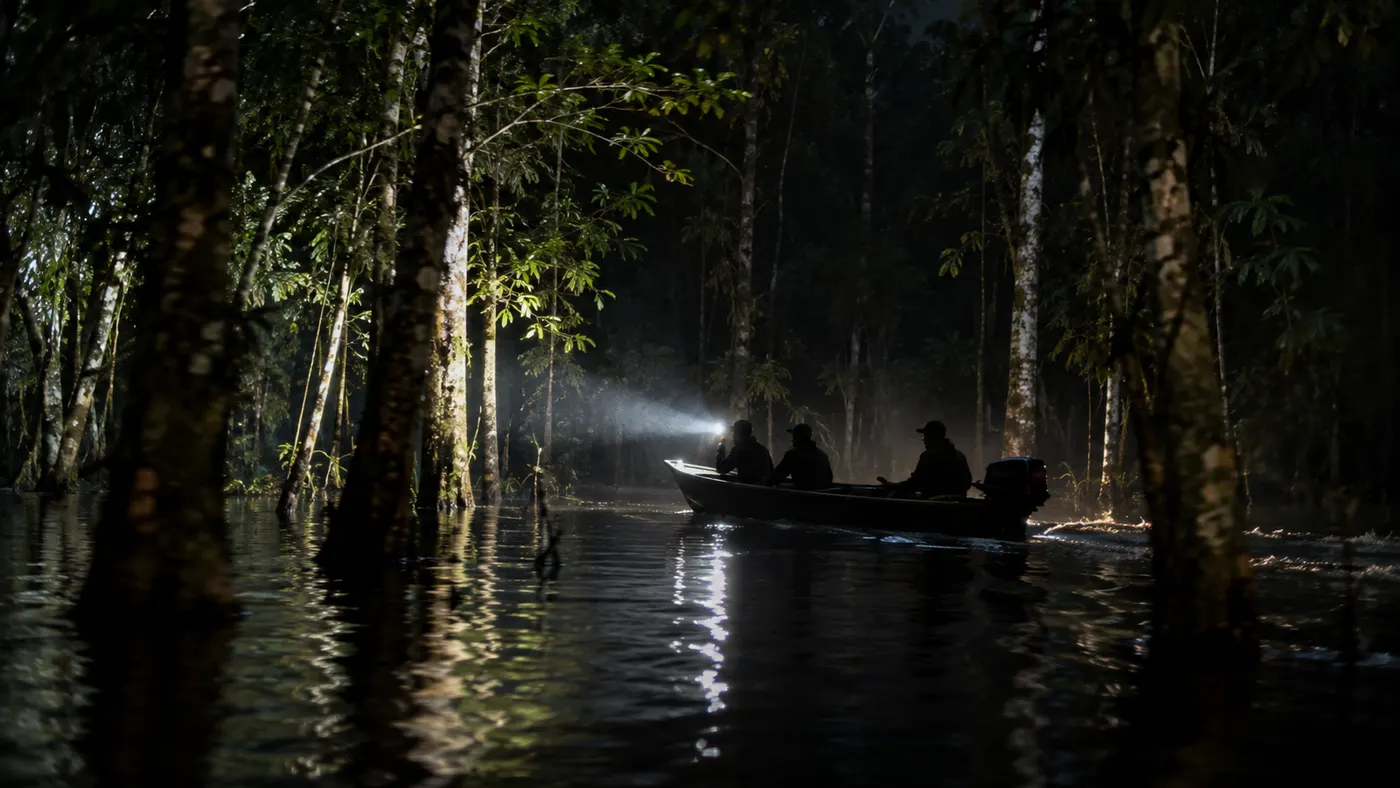
The five-day expedition nearly ended empty-handed.
The team managed to find only two plants, and neither was flowering. The rainy season had arrived late but with unusual intensity, and rising water levels were putting the plants under stress. The researchers continued searching along the rivers, but found nothing else.
At 11 p.m. on the night before their return flight, Magdalena shared his disappointment with Gustavo Melo, the expedition's boatman and a member of the Tucano Indigenous community.
Melo's response was unexpected: he knew exactly where else the waterlily could be found.
Their flight was only 10 hours away.
At 1 a.m., in complete darkness, the team set off in the opposite direction from the airport, heading deep into the flooded rainforest. Their only guide was Melo's knowledge of the landscape and his instincts.
Shortly before sunrise, they reached a small lake hidden in the middle of the forest.
There were five more plants.
And one of them was in flower.
The team collected the specimen they needed and made it back in time for their flight. That specimen became the basis for the scientific description of the new species: Victoria colombiana, the Colombian giant waterlily.
Its formal scientific description was published in the journal Phytotaxa on October 7. Its leaves can grow up to 2 meters across.
Endangered almost as soon as it was found
This is where the story takes a more troubling turn.
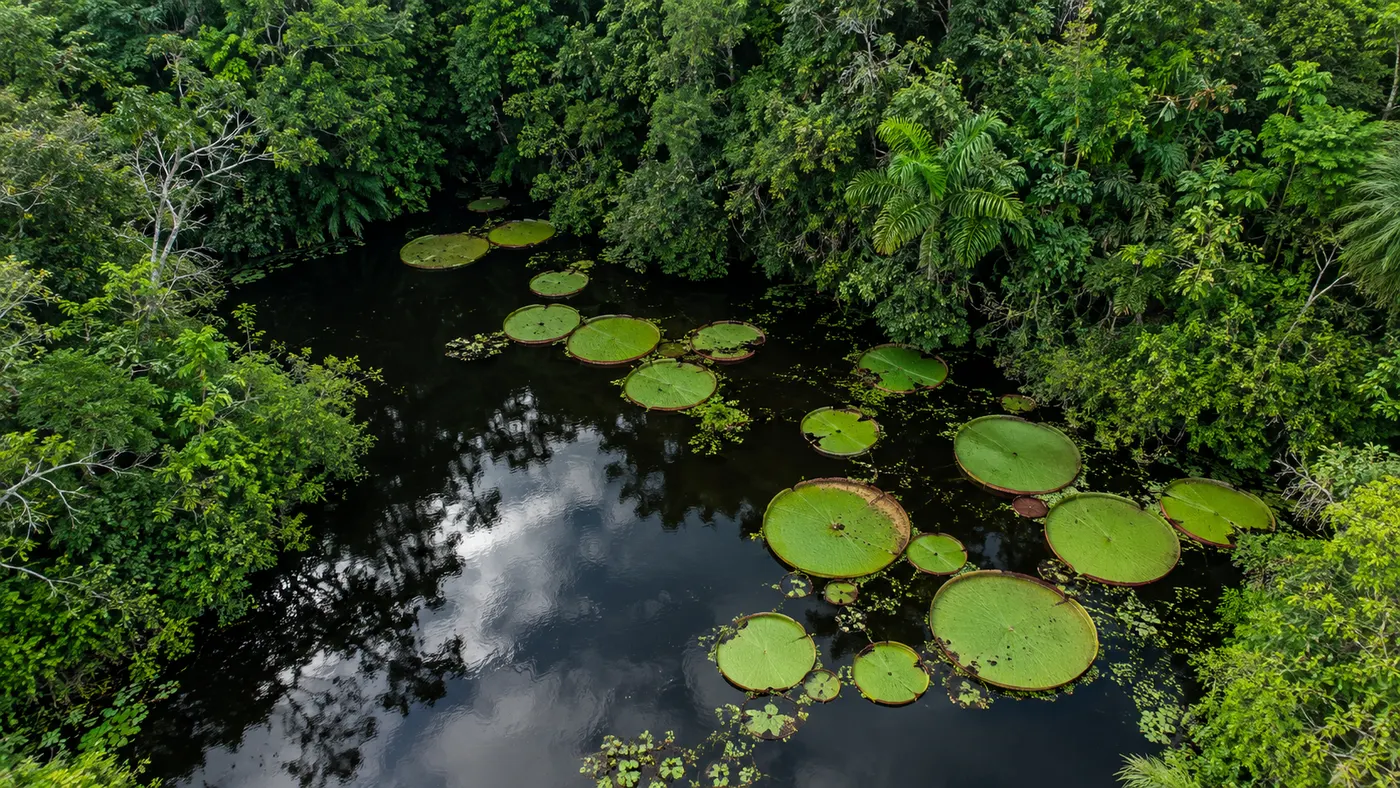
During the expedition, the team documented seven plants across two lakes. Later satellite analysis revealed a third lake where the species was also present.
But researchers estimate that only around 30 to 50 individuals may remain in the wild.
The team is now working toward having the species classified as "Critically Endangered" on the International Union for Conservation of Nature's Red List.
Science has only just discovered it — yet the possibility of losing it is already very real.
There is still some hope.
Researchers have collected seeds and are attempting to grow the plant in Bogotá. If successful, it could one day be displayed at Kew alongside its relatives.
Another idea under discussion is establishing a new population in a more accessible lake within Indigenous lands. Such a project could both help protect the species and support nature-based tourism in the region.
The pieces of a discovery
What makes this story remarkable is that the discovery was not the result of one person or one method.
It came from an ordinary Instagram photo taken by a plant grower during a trip, the sharp eye of a specialist, satellite imagery and, perhaps most importantly, the knowledge of local people who had known these waterlilies since childhood.
One of the Indigenous members of the team said he had known the plants since he was a child, although he rarely encountered them.
Bernal of the Bogotá Botanical Garden offered a fitting way to describe the discovery: something ordinary to one person can be a hidden treasure to someone else.
For science, this giant waterlily is new.
For the people who had passed by it for years, it had always been there.
And perhaps the next major discovery is already sitting in someone's phone right now, hidden inside an ordinary photograph and waiting for someone to notice.
TagsBiology
Related posts
All postsLife's "Universal" Language Isn't as Universal as We Thought: An Organism Found in a Pond Broke the Rule
Nikon Disqualified the Winner of Its Microscopy Competition Over AI. But the Line Isn't as Clear as It Seems
The "Guest Star" That Shone for Six Months in 1181: An 845-Year-Old Mystery Still Isn't Fully Solved