
The "Guest Star" That Shone for Six Months in 1181: An 845-Year-Old Mystery Still Isn't Fully Solved
The supernova recorded in 1181 as a "guest star" in China and Japan, and in a poem written for Saladin in Cairo, only had its remnant identified in 2013, thanks to an amateur astronomer. Pa 30 looks like no other known remnant: a frozen firework.
Not the birth of a star, but its death
On August 6, 1181, astronomers in southern China noticed a bright point in the sky where nothing had been visible before. A day later, it was also observed in Japan. According to Chinese records, this "guest star" remained visible for 185 days in the region of the sky we now know as the constellation Cassiopeia, without moving against the background stars. It was last seen on February 6, 1182.
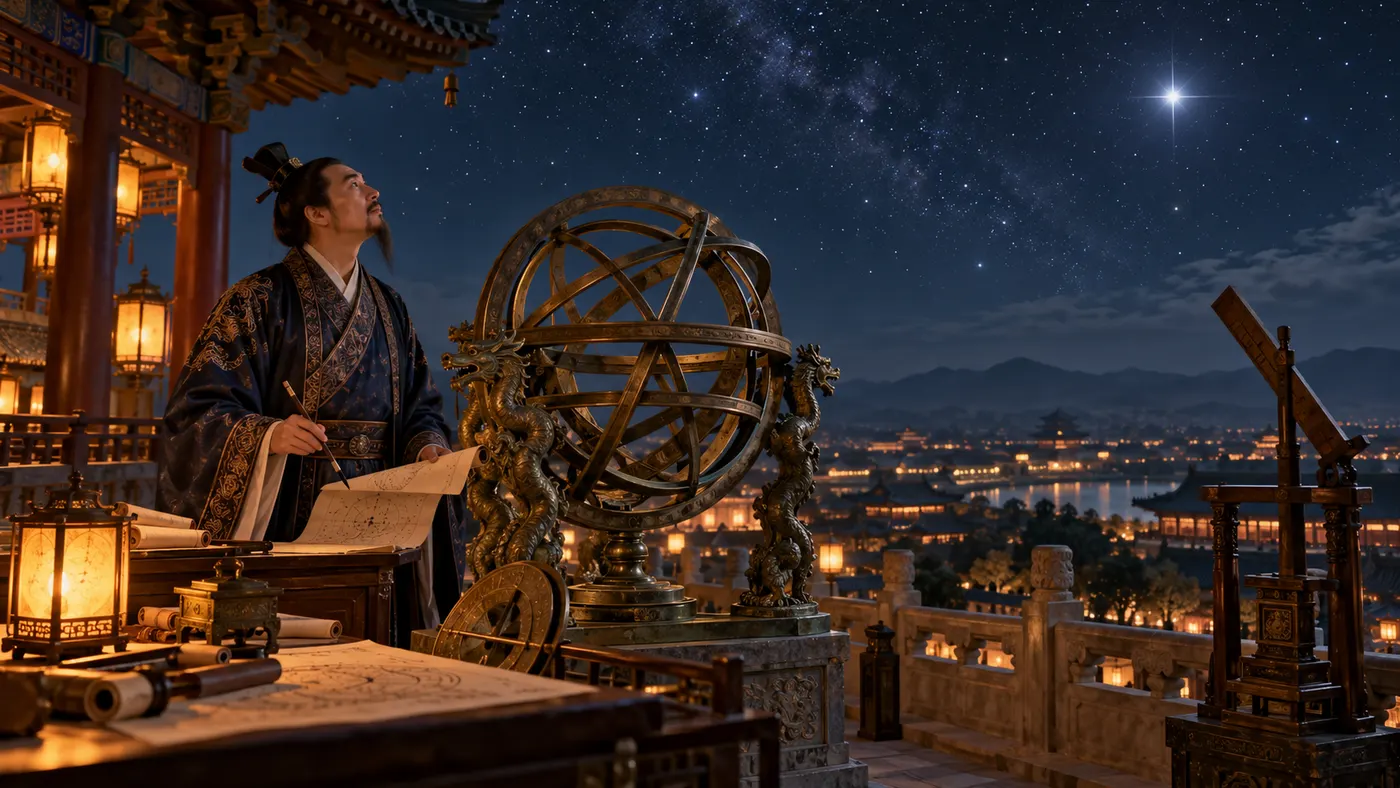
The people who recorded it did not know what it was. Today, however, the overwhelming weight of evidence indicates that it was a supernova: not the birth of a new star, but the explosion of a dying one.
It is one of five events in the Milky Way that can be confidently identified as supernovae from historical records. The others were observed in 1006, 1054, 1572 and 1604. Of them all, this one kept its identity hidden for the longest.
The event is mentioned in a total of eight Chinese and Japanese texts. At the time, the Genpei War was raging in Japan, while Henry II was on the throne in England. And in another part of the world, a poet had seen the same star.
A poem from Cairo
For a long time, the supernova was thought to have been recorded only in East Asia. But in 2025, Jens Fischer of the University of Münster noticed something unexpected in a manuscript preserved at Oxford's Bodleian Library.

The manuscript contains the works of Ibn Sana al-Mulk, a 12th-century poet who lived in Cairo. One of the poems was written in praise of Saladin, the sultan of Egypt and Syria. When Fischer re-dated the poem, he realized that it referred to a new star visible in the sky sometime between late 1181 and the spring of 1182.
The poem even gives the star's location: in or near a group of stars known in the Arabic astronomical tradition as the "Henna-Dyed Hand." This group was associated with the five bright stars that form the familiar W shape of modern-day Cassiopeia. According to the poet, the new star was brighter than even the brightest star in the group.
This is the first known Arabic record of the 1181 supernova, completely independent of the East Asian accounts. A praise poem written for a sultan became part of an astronomical puzzle 845 years later.
The missing remnant
When a supernova explodes, it leaves behind an expanding cloud of gas and dust. The supernova of 1054, for example, produced the famous remnant we now know as the Crab Nebula. But the remnant of the 1181 event remained unidentified for centuries.
For roughly 50 years, a radio source called 3C 58 was considered the strongest candidate because its position was close to the location described in historical records. But measurements created a problem: 3C 58 appeared far too old to be the remnant of an explosion only 845 years ago, with estimates placing its age at several thousand years.
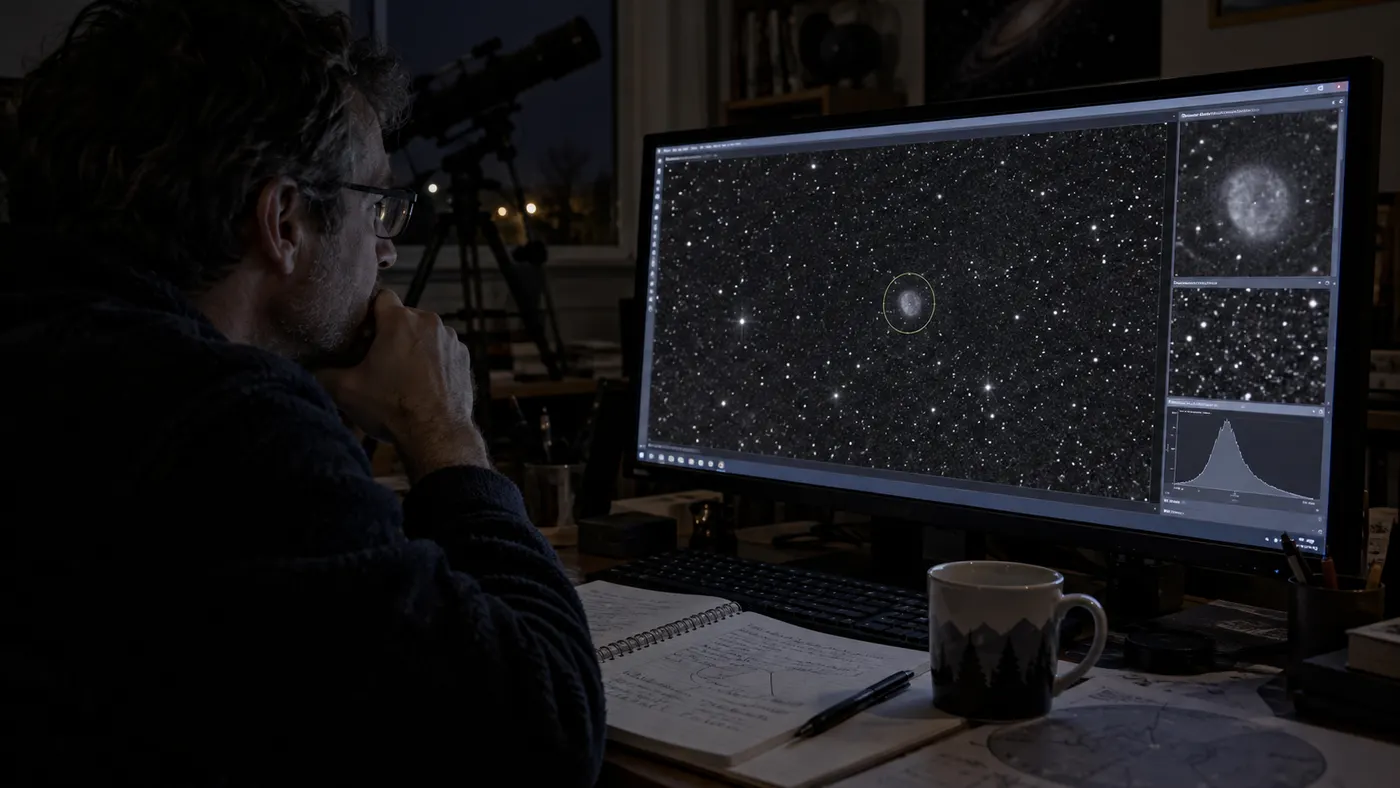
The answer came from an unexpected source. In 2013, amateur astronomer Dana Patchick was examining data from NASA's infrared sky survey when he discovered a previously unnoticed nebula. Because it was the 30th nebula he had identified, it was named "Pa 30." Studies conducted in the following years showed that the nebula's age, location in the sky and other properties were consistent with the guest star seen in 1181. Today, Pa 30 is considered the strongest candidate for the remnant of the 1181 supernova.
A failed explosion
It soon became clear that Pa 30 was not an ordinary supernova remnant.
In some thermonuclear supernovae, an exploding white dwarf is completely destroyed. Supernovae caused by the core collapse of massive stars, meanwhile, can leave behind a neutron star or a black hole. But at the center of Pa 30 lies something very different: an extremely hot, unusual star that survived the explosion and is producing an extraordinarily fast stellar wind.
According to the leading explanation, the explosion began when two white dwarfs — the dense remnants of stars that had reached the end of their lives — merged. But the explosion failed to completely destroy the star, leaving part of it behind. This rare class of event is known as a Type Iax supernova. Pa 30 is the only known Type Iax supernova remnant in the Milky Way.
Some historical records compare the guest star of 1181 with Saturn. It is unclear whether this comparison referred to its color or its brightness, but modern analyses indicate that the explosion was significantly fainter than an ordinary Type Ia supernova. That fits the idea of a partial, failed explosion.
A nebula like a firework
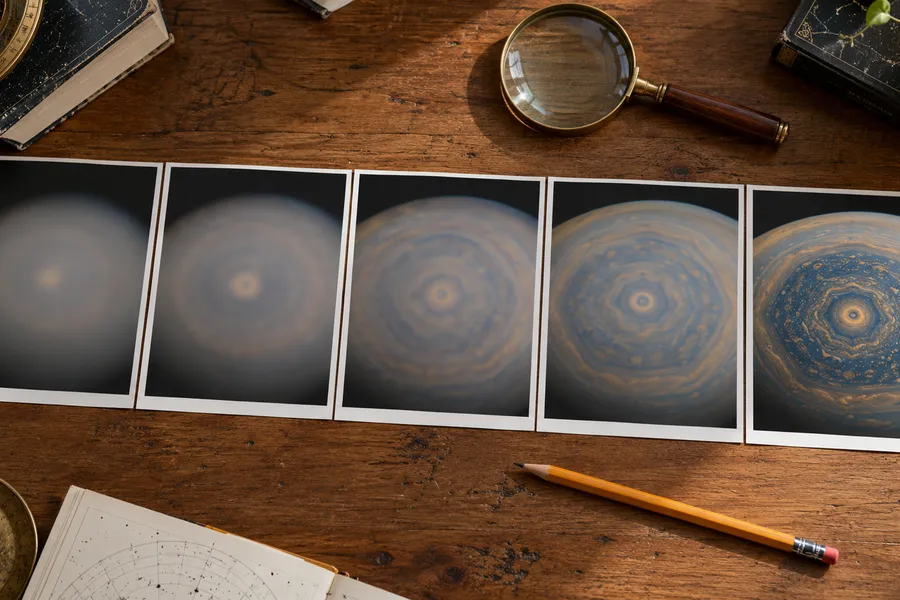
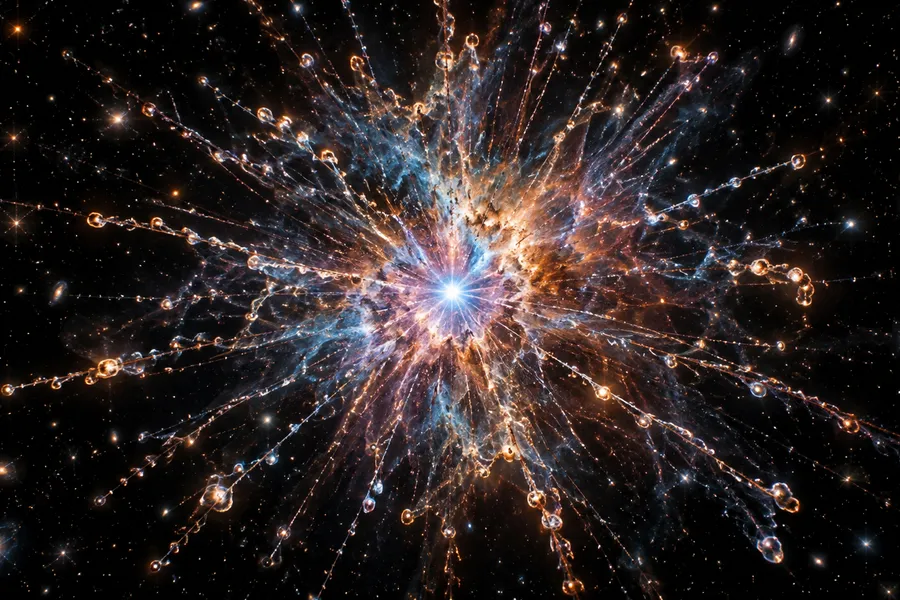
What makes Pa 30 one of the strangest objects in astronomy is its appearance. The nebula consists of thin filaments stretching outward in remarkably straight lines from the central star in every direction. It looks like a firework explosion frozen in the sky.
No similar structure has been seen in any other known supernova remnant. New images captured with the Gemini North telescope in Hawaii and released in October 2026 show that these filaments are not simply smooth lines. Instead, they consist of chains of small knots, resembling beads on a string. Each of these knots is roughly four light-days across — far larger than the region occupied by the orbits of the planets in our Solar System. The new images reveal roughly ten times more filamentary structure than had previously been seen.
Exactly how these filaments formed is still unknown. One of the leading ideas is that the powerful wind from the central star is pushing material left behind by the explosion and shaping it into these long structures. But for now, that remains only a proposed explanation.
845 years later
There is something compelling about this story. Astronomical records from Chinese courts, notes written in Japan and a praise poem addressed to a sultan were never created for modern scientific research. Yet today, astronomers using some of the world's most powerful telescopes still return to those old texts to understand what people saw in the sky centuries ago. And the nebula that ties all of these records together was discovered in data examined at home by an amateur astronomer.
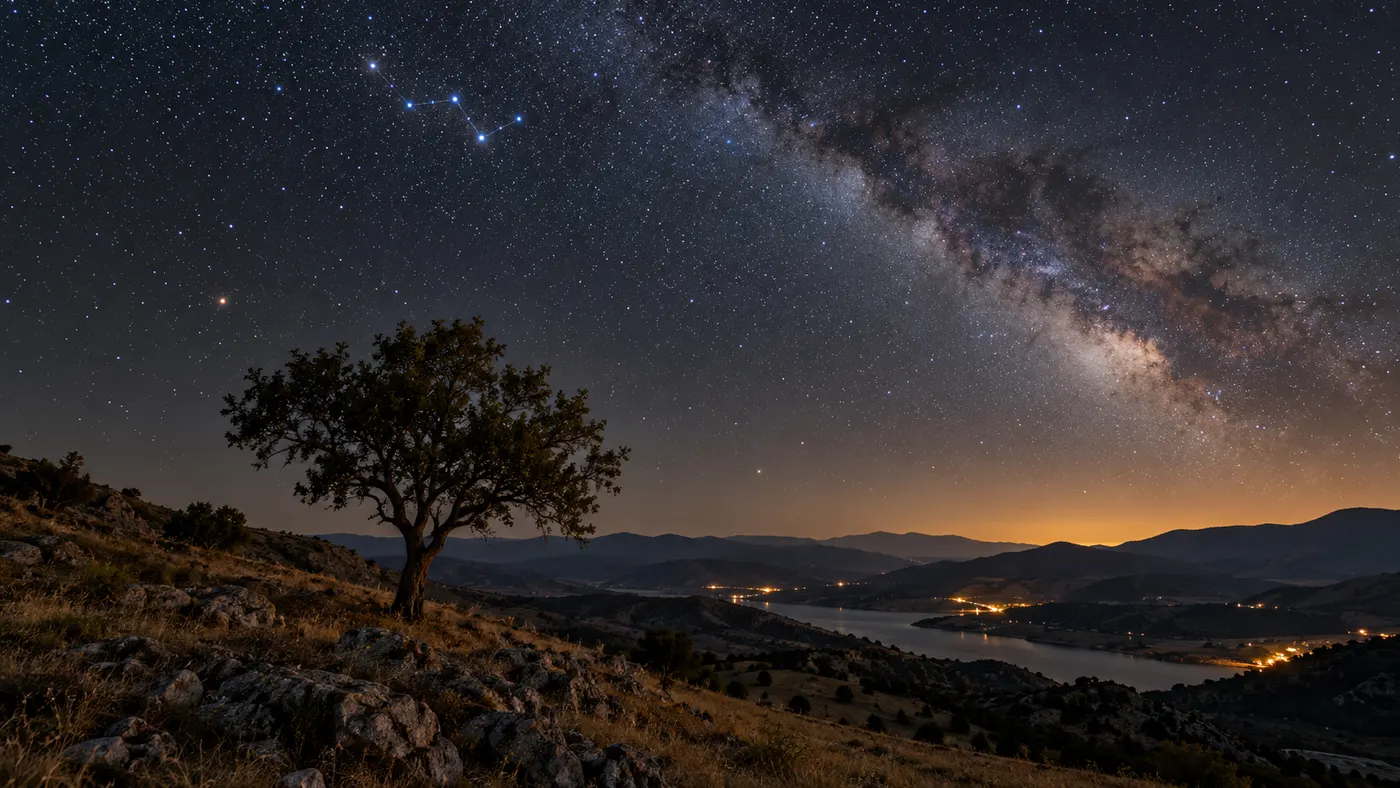
Cassiopeia is easy to spot from Türkiye at this time of year, appearing in the northeastern sky during the evening and recognizable by its five stars forming a W shape. Pa 30 itself is far too faint to see with the naked eye. But looking at that W and knowing that, 845 years ago, a star shone for months in the same region of the sky — and that the remains of its explosion are still expanding like a cosmic firework — makes a familiar constellation look very different.
TagsSpace