
They Want to Light Up the Night From Space. Who Owns the Darkness?
Reflect Orbital wants to sell sunlight at night by beaming it down from giant mirrors in orbit. Its first test satellite has been approved and a ground rehearsal has taken place; astronomers see a serious threat to the night sky.
The Idea: Selling Sunlight
Reflect Orbital is a startup based in Hawthorne, California. Its plan is to place satellites carrying large, deployable mirrors into low Earth orbit, then use those mirrors to direct sunlight onto specific locations on the ground.
The satellites would travel in specially designed orbits near the boundary between day and night. That would allow them to illuminate areas where the sun has just set or has yet to rise. The company envisions several applications:
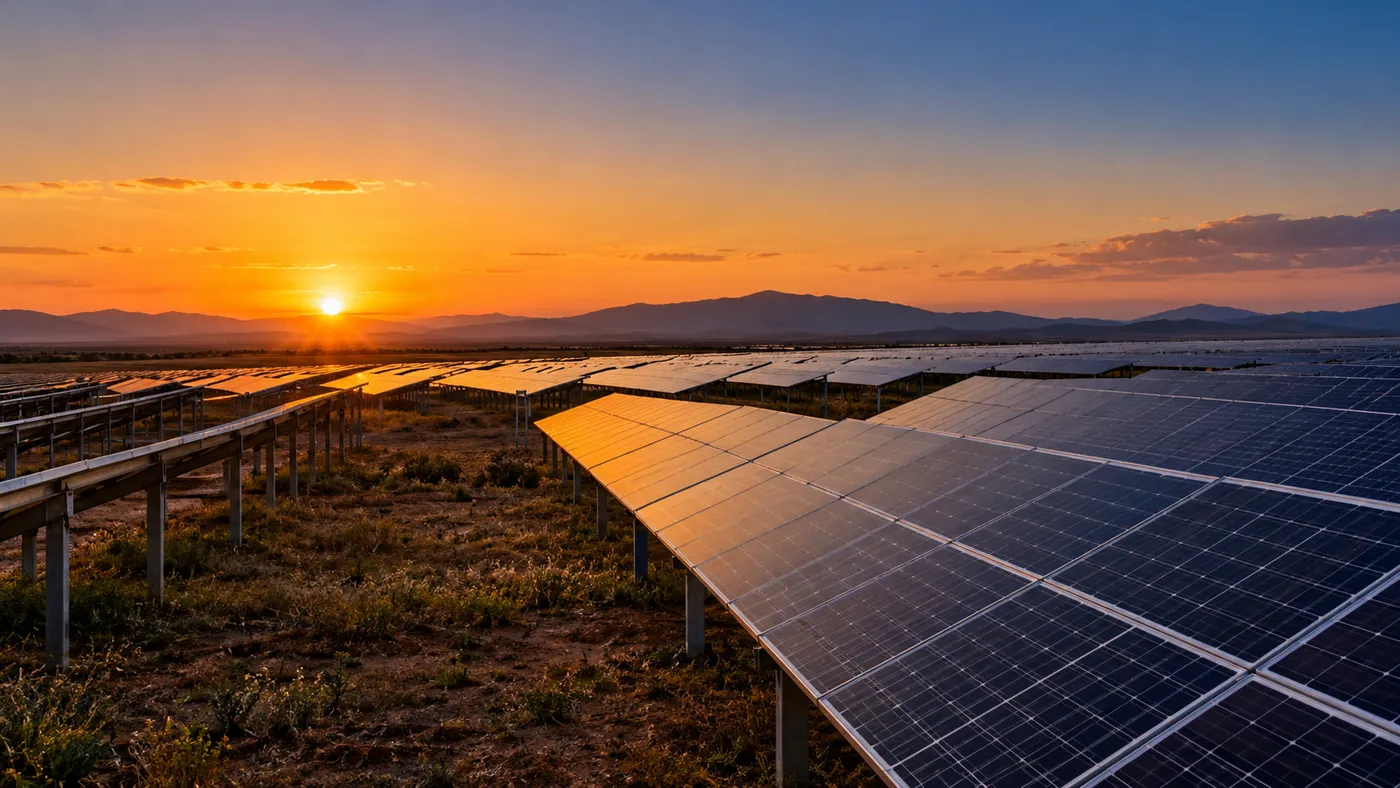
- Solar farms: Keeping solar panels generating electricity for a little longer after sunset and before sunrise.
- Search and rescue: Illuminating large areas during nighttime searches.
- Disaster zones and infrastructure work: Providing temporary light where it is needed.
As one of the company's founders has explained in an earlier interview, the goal is to sell sunlight as a resource. Reflect Orbital has also attracted investment from Sequoia, one of the best-known venture capital firms in the United States.
The idea itself is not new. Spaceflight pioneer Hermann Oberth proposed using giant orbital mirrors to illuminate Earth as early as the 1920s. Russia's Znamya 2 experiment in 1993 even succeeded in creating a moving patch of light on Earth's surface using a mirror deployed in space. What sets Reflect Orbital apart is its attempt to turn the concept into a commercial service.
Where Does the Project Stand?
The test satellite has received approval. In July 2026, the US Federal Communications Commission (FCC) authorized the company's first test satellite, Eärendil-1. It is designed to carry a thin reflector measuring approximately 18 by 18 meters and orbit at an altitude of around 625 kilometers (388 miles). The satellite is intended to illuminate an area roughly 5 kilometers (3.1 miles) in diameter. After its one-year mission, it is expected to be deorbited.
Launches from India are being planned. On October 14, the company announced that it had purchased two launches from Indian rocket company Skyroot for future satellites. Launch dates have not been announced.
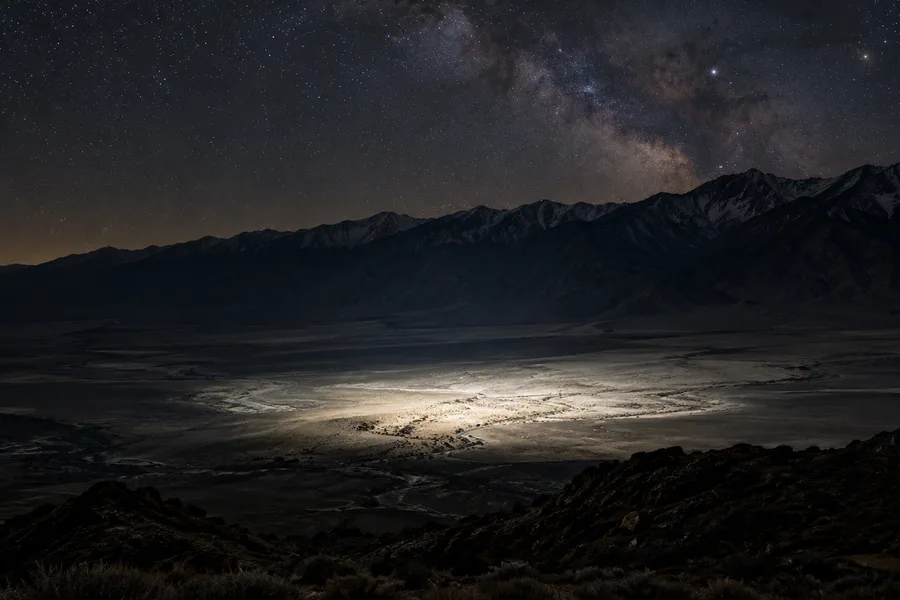
A rehearsal took place on the ground. On October 10, Reflect Orbital staged a demonstration near Lone Pine, close to Mount Whitney, using powerful searchlights to simulate illumination from space. A mountain search-and-rescue team took part, practicing nighttime searches and stretcher transport. According to interviews with participants conducted by DarkSky International, an organization dedicated to protecting the night sky, the lights illuminated an area roughly 5 by 16 kilometers (3 by 10 miles), with brightness estimated at about twice that of a full moon. But the demonstration was entirely ground-based: Reflect Orbital has not yet directed sunlight onto Earth from its orbital mirrors.
The long-term ambition is much bigger. According to the timeline on the company's website, its targets are:
| Year | Target satellite count |
|---|---|
| 2026 | 2 |
| 2027 | 36–38 |
| 2028 | More than 1,000 |
| 2030 | More than 5,000 |
| 2035 | More than 50,000 |
The company's website gives two different figures for 2027, while sources also differ on whether the first satellite will launch in 2026 or 2027. That makes it clear this is not a finalized schedule.
Did It Actually Help in the Field?
One of the most interesting aspects of the demonstration is that its results were not quite as bright as the company's promises. According to DarkSky International, rescue team leader Phillip Cash said the lighting made it easier to move across the terrain but offered only limited benefits when it came to finding missing people. Worse, glare from the lights made it harder for team members to see in the dark.

In other words, the first field test revealed a more complicated picture than expected for one of the supposed benefits of space mirrors. Of course, a single ground-based demonstration is not enough to draw firm conclusions. Still, it offers an important glimpse of the gap between the promise and the practical reality.
What Does Physics Say?
The idea also faces a basic test of physics. Consider these figures:
- Full moon illumination: Approximately 0.3 lux (a unit of illuminance, or the amount of light falling on a surface).
- Midday sunlight: Approximately 100,000 lux.
According to calculations by astronomer Michael Brown of Monash University in Australia, achieving even 20% of the illumination provided by the midday sun would require around 3,000 satellites, each equipped with a mirror 54 meters across. And because those satellites move quickly, the illumination at any given location would last only a few minutes.
That means keeping solar panels operating at meaningful levels at night would require an enormous number of mirrors. It also helps explain why the company's initial focus is on the hours just after sunset and before sunrise rather than the middle of the night.
Why Are Astronomers Worried?
The American Astronomical Society (AAS) had urged the FCC not to grant approval. Its central objection is that this satellite is fundamentally different from an ordinary communications satellite. Communications satellites unintentionally contribute to light pollution by reflecting sunlight. This satellite, by contrast, is deliberately designed to direct sunlight toward Earth as brightly as possible. The society warned of potentially catastrophic harm to astronomical research, as well as possible eye injuries to amateur astronomers observing through telescopes.
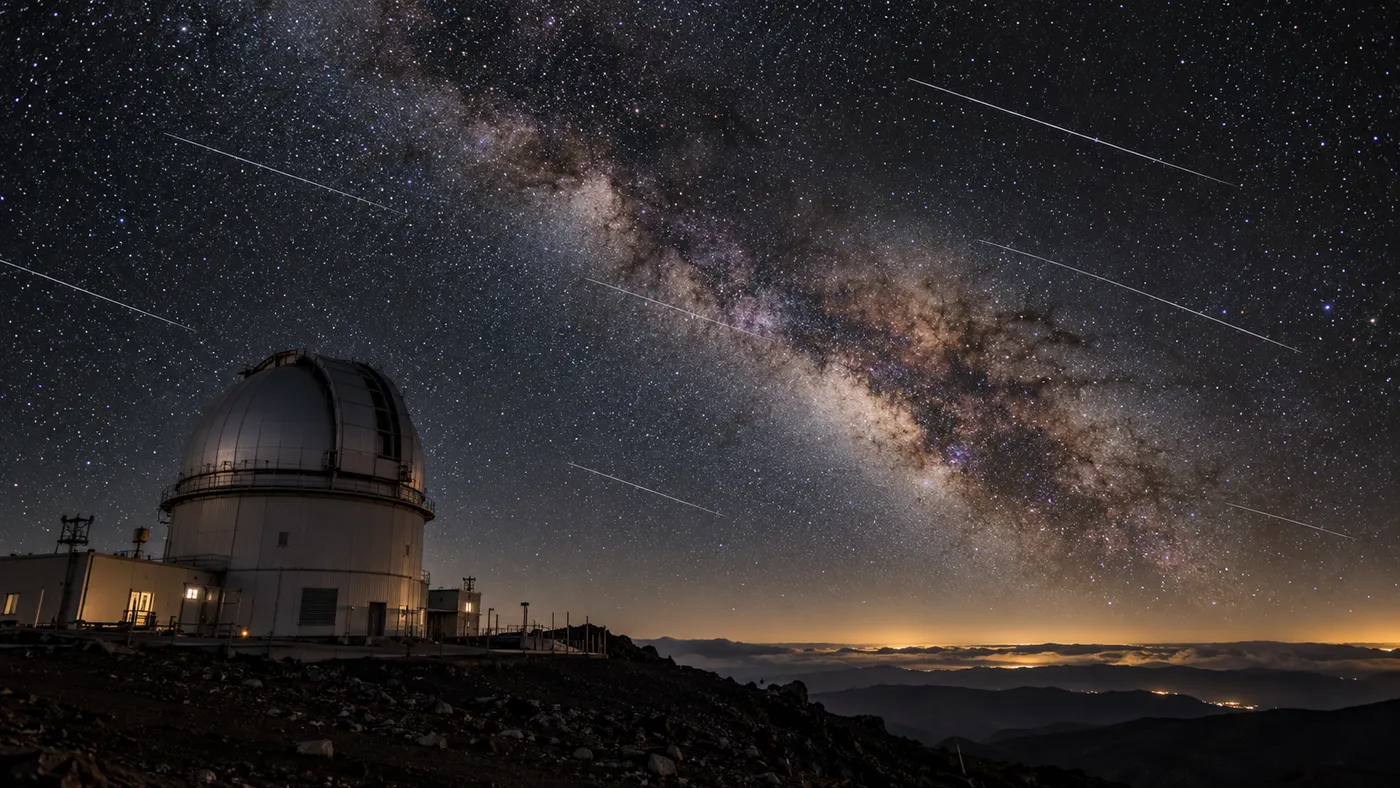
A study published in August 2026 put numbers to those concerns. Researchers Kocifaj, Bakos and Kundracik modeled how light from the 54-meter mirrors the company hopes to deploy in the future could scatter through the atmosphere:
- At 14 kilometers (8.7 miles) from the center of the beam, much of the sky could become brighter than on a moonlit night.
- Even 34 kilometers (21 miles) from the center, the sky in the direction of the beam could appear brighter than it does under a full moon.
- In a scenario where 400 mirrors illuminate the same area, the resulting light pollution could be visible from 80 kilometers (50 miles) away.
These are results from atmospheric models, not measurements from operating satellites. But the key point is clear: the effects of the light would not be confined to the intended target area.
And the issue goes beyond astronomy. Artificial light at night is known to disrupt animals' migration, reproduction and feeding patterns, and it can affect human sleep as well. Environmental organizations and some pilots' associations are also among those opposing the plan.
Who Gets to Regulate the Light?
Perhaps the most intriguing part of the story is that it is not clear which authority would regulate the light itself.
The FCC's authorization covers only the radio frequencies the satellite uses to communicate with the ground. The commission explicitly stated that impacts on observations of the night sky fall outside its jurisdiction. On October 9, the FCC revised the authorization, but the changes were limited to a bond period and a technical correction involving radio frequencies. A petition by DarkSky International and other organizations seeking reconsideration of the approval has yet to be resolved.
The situation becomes even more complicated internationally. As an analysis in The Conversation points out, the company is American, some of its future satellites could launch from India, and the reflected light could reach a third country's territory. Neither US nor Indian regulators have yet addressed the question of light beamed down from space.
What Does the Company Say?
Reflect Orbital has made several commitments in response to criticism. It argues that the vast majority of people and places will never see its light. In comments to The Conversation, the company said customers would need authorization, approval from local authorities and identity verification before receiving the service. Places that do not want the light, it says, will not receive it.
The company has also pledged to avoid observatories, share its satellites' positions with scientists, and work with NASA and the US National Science Foundation to protect astronomical observations. Its reasoning is that every bit of light it can sell has value, so minimizing the visibility of its mirrors outside their intended target areas is in its own commercial interest.
Who Owns the Darkness?
The company's promise that those who do not want the light will not receive it sounds reassuring. But atmospheric models suggest that its effects could spread tens of kilometers beyond the beam. That raises an unavoidable question: if a search-and-rescue team requests illumination, who protects the neighboring village that does not want it, the observatory nearby, or the birds migrating overhead? Reports of more limited-than-expected benefits from the first field test make that question even more pressing.
Throughout human history, the night sky has been a shared heritage. We have used the stars to navigate, build calendars and tell stories. Today, that sky is already becoming increasingly crowded with reflected light from thousands of satellites. Existing regulations address matters such as launching spacecraft and communicating with them, but it remains unclear who should oversee the environmental and astronomical consequences of deliberately beaming sunlight down from space. The question of who owns the darkness may never have been so concrete.
TagsSpace