
Why Do Great Danes Live Shorter Lives Than Chihuahuas? Scientists Find a New Clue in DNA
Among animals, bigger usually means longer-lived, but dogs reverse the rule. A new study in Science suggests molecular aging runs faster in large dogs' DNA, especially in regions linked to "jumping genes."
The Strange Rule of Canine Lifespan
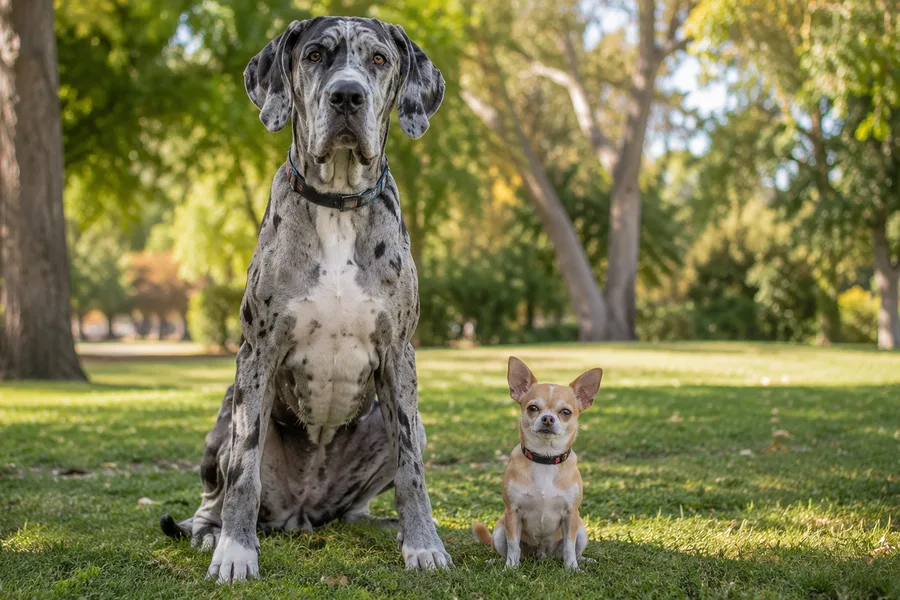
Across different species, larger animals generally tend to live longer. But within a single species—particularly dogs—the relationship runs in the opposite direction. The lifespan gap between large and small dog breeds has been known for years, yet its underlying causes remain incompletely understood.
Noah Snyder-Mackler of Arizona State University, one of the study's authors, frames the question this way: We all know that bigger dogs tend to have shorter lives, but what we don't know is whether their cells actually age faster or whether they simply develop certain diseases earlier.
The distinction matters. If large dogs follow the same biological aging trajectory as smaller dogs but become ill sooner, researchers may need to focus on triggers that emerge late in life. If the aging process itself runs faster from the outset, however, that could point to changes that can be measured—and perhaps eventually targeted—long before disease appears.
How Do You Measure a Dog's “Biological Age”?
Using data from the Dog Aging Project, which follows thousands of pet dogs, researchers examined 1,640 DNA methylation profiles derived from blood samples belonging to 894 dogs of different breeds.
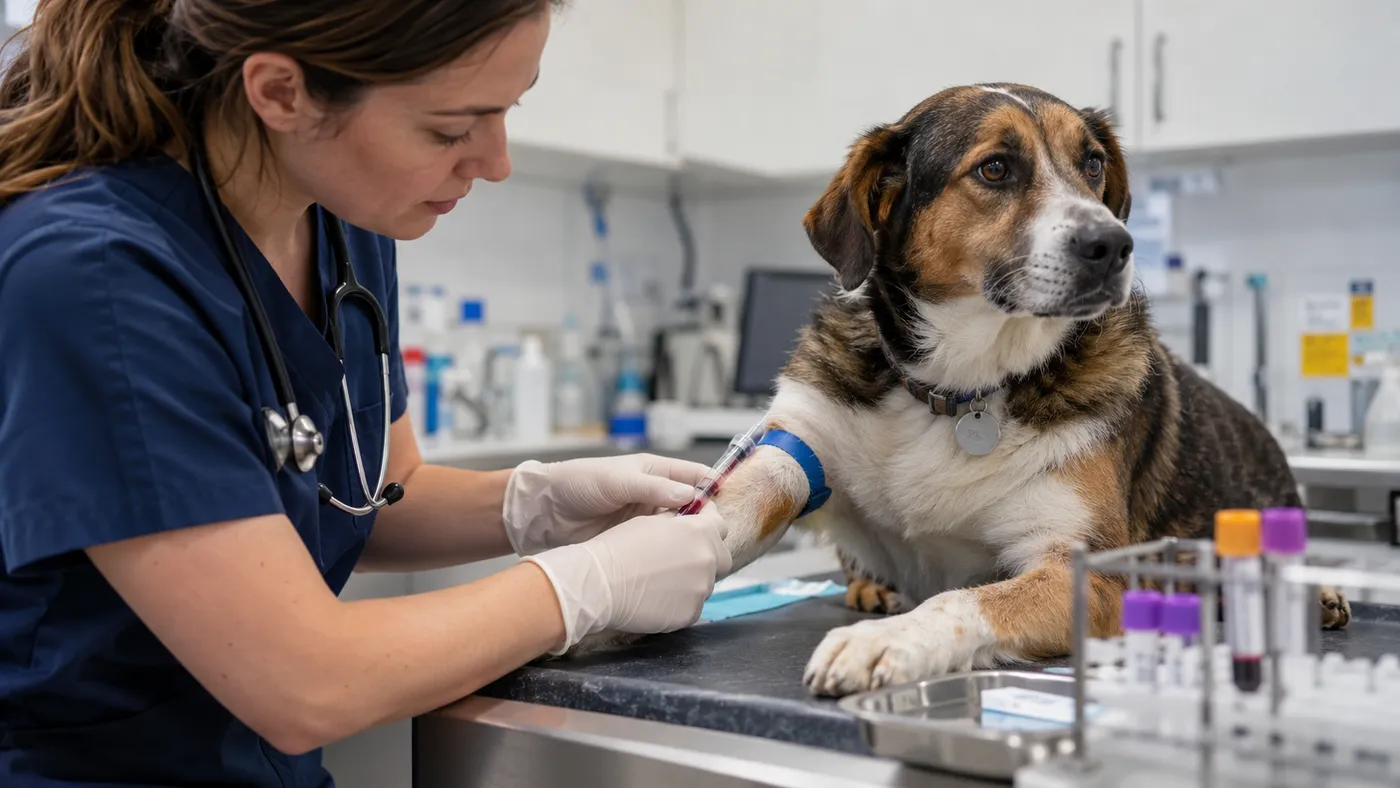
They focused on chemical markers known as DNA methylation. Think of them as tiny labels attached to DNA: They don't change the genetic sequence itself, but they help regulate which genes are switched on or off. Because these markers change in recognizable patterns with age, they can serve as a kind of clock for estimating an animal's “biological age.”
The molecular clock developed by the researchers could generally estimate a dog's age with an error of less than one year. More importantly, dogs whose biological age appeared older than their chronological age were found to have a higher risk of dying earlier.
The “Brakes” Wear Down Faster in Large Dogs
One of the study's most striking findings is that the molecular clock appears to tick faster in large dogs. Much of this acceleration is concentrated in particular parts of the genome: regions associated with so-called “jumping genes.”

Jumping genes are pieces of DNA that can copy themselves and insert those copies elsewhere in the genome. Such sequences make up a large proportion of mammalian DNA, including our own. Normally, methylation marks help keep them silent. Losing those marks could make it easier for jumping genes to become active again. Their activation has been linked to genomic instability, cancer and other age-related diseases. However, this study did not directly demonstrate that jumping gene activity is higher in large dogs or that such activity causes faster aging.
To use Snyder-Mackler's analogy, methylation in these regions wears away more quickly as large dogs age, as though the genome were losing the tape or restraints that keep these mobile elements in place. According to Arizona State University, giant dog breeds experience roughly 35% more methylation loss per year in regions associated with jumping genes known as LINE1 than smaller breeds do.
The study also found that male dogs accumulate age-related changes more quickly than female dogs.
An Important Caveat: Correlation Is Not Causation
These findings need to be interpreted carefully. The study shows a strong association between faster methylation loss and shorter lifespans in larger dogs, but it does not prove that these changes cause aging—or establish exactly how they might contribute to it.
Nor does this explanation invalidate earlier ones. Previous theories about why large dogs have shorter lives have largely focused on the biology of growth. According to Snyder-Mackler, the new study does not replace those ideas; it adds a molecular layer beneath the relationship between body size and lifespan.
If you have a large dog, these findings do not mean you need to change how you care for it. This is a discovery about how aging works, not a treatment or a recommendation for pet care.
Why Does It Matter?
The most promising aspect of the research is that it shows aging is not a single event but a measurable process. As Snyder-Mackler emphasizes, if parts of the aging program progress more rapidly throughout adulthood, those changes might be measured before disease develops, tracked over time and perhaps one day modified.
That does not mean making a Great Dane live as long as a Chihuahua. As the researchers put it, slowing molecular aging would not turn a Great Dane into a Chihuahua in terms of lifespan, but it might help stretch out one part of an otherwise compressed aging process.
Dogs matter to aging research for more than their own sake. They share our homes, are exposed to many of the same environmental influences and age much faster than we do. Understanding how they age could therefore help us better understand our own aging someday. Perhaps our most loyal companions still have something to teach us about growing old.

TagsBiology