
Not All Early Birds Were Trying to Fly: A Strange 150-Million-Year-Old Fossil Has Been Found
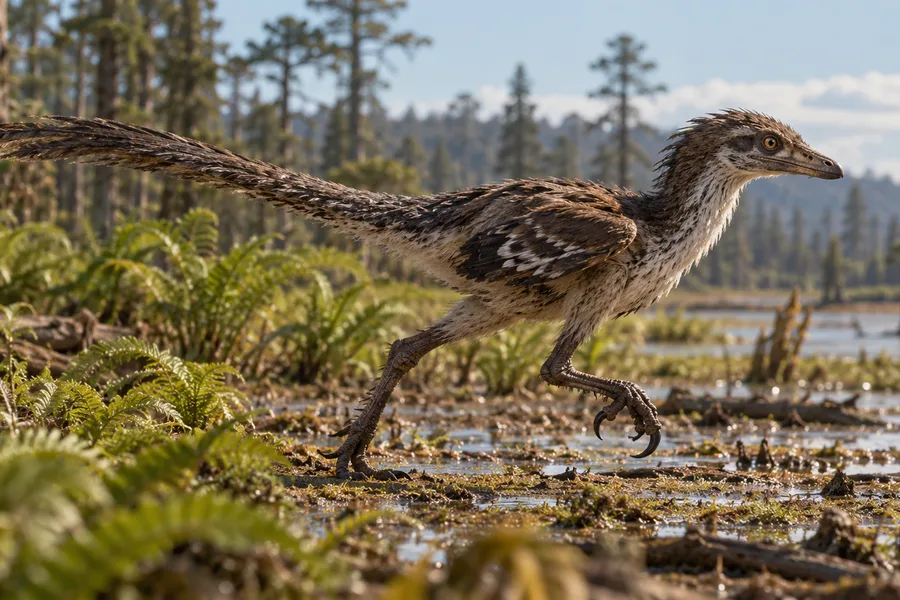
Yuezhuornis, a 150-million-year-old fossil from China, is one of the oldest known birds and the earliest known example of flight loss. With short wings and a sickle-shaped claw, it was a ground-running hunter rather than a flier.
Yuezhuornis: A Flightless Jurassic Bird
Scientists have described a new bird species after studying a fossil discovered in August 2024 in Fujian Province in southeastern China: Yuezhuornis yangyuanensis. The second part of its name comes from Yangyuan Township in Zhenghe County, where the fossil was found. The study was published in Nature on October 14.
Yuezhuornis lived around 150 to 148 million years ago, during the Late Jurassic. That places it near the very beginning of the bird fossil record. The famous Archaeopteryx, long considered one of the earliest known birds, lived at roughly the same time in what is now Europe.
The new species was about the size of a crow and weighed roughly 800 grams. But what makes it especially remarkable is its unusual combination of anatomical features.
Bird and Predatory Dinosaur Traits in the Same Animal
The skeleton of Yuezhuornis brings together two different worlds:
Bird-like traits: Thin skull bones, a bird-like pelvis and bird-like hindlimb anatomy.
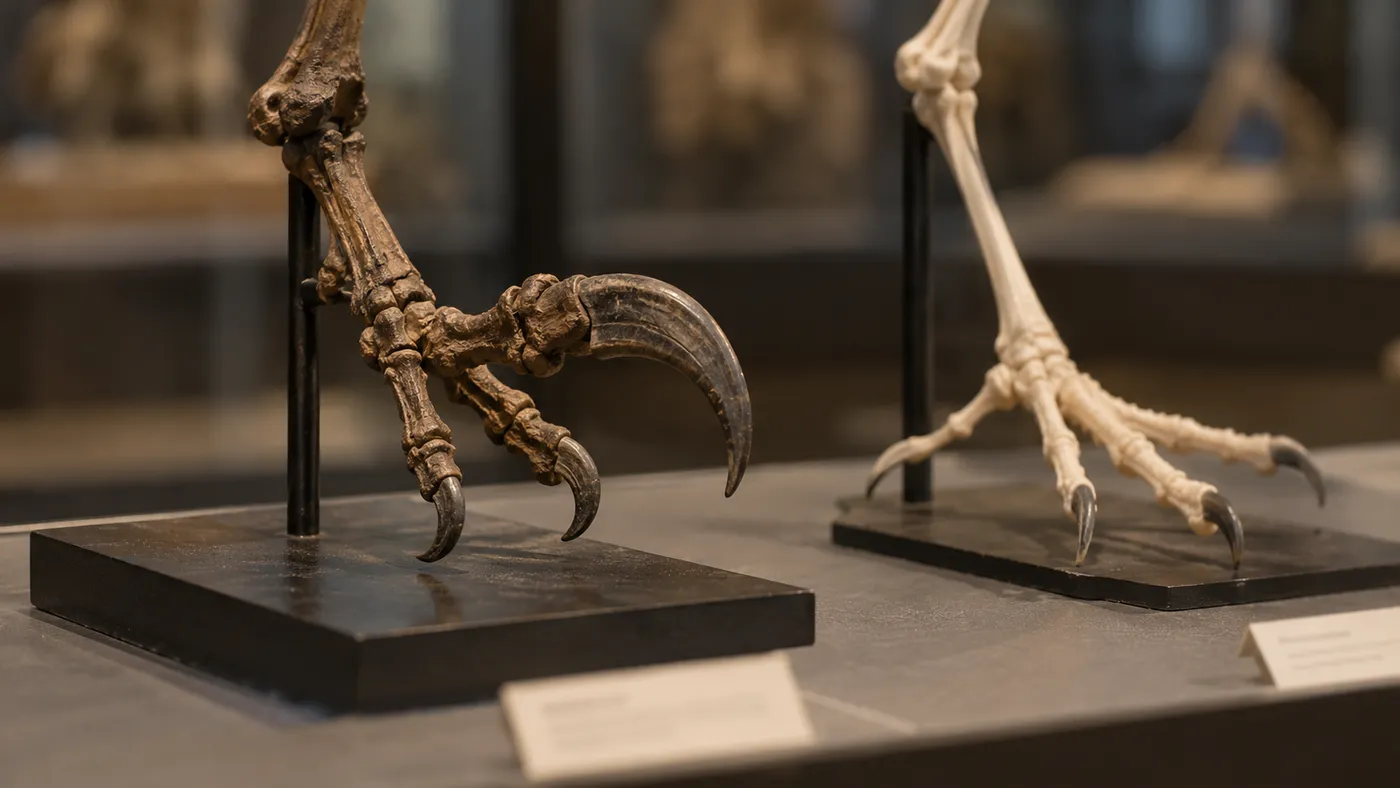
Dinosaur-like traits: Most notably, its second toe could bend far backward and ended in a sickle-shaped claw, recalling the small predatory dinosaur group that also included Velociraptor. Its closely packed, serrated teeth and long bony tail were also part of this unusual combination.
And perhaps most importantly: the wings. Yuezhuornis had forelimbs that were strikingly short relative to its body, around one-third shorter than its hindlimbs. This type of proportion is common among many non-avian predatory dinosaurs.
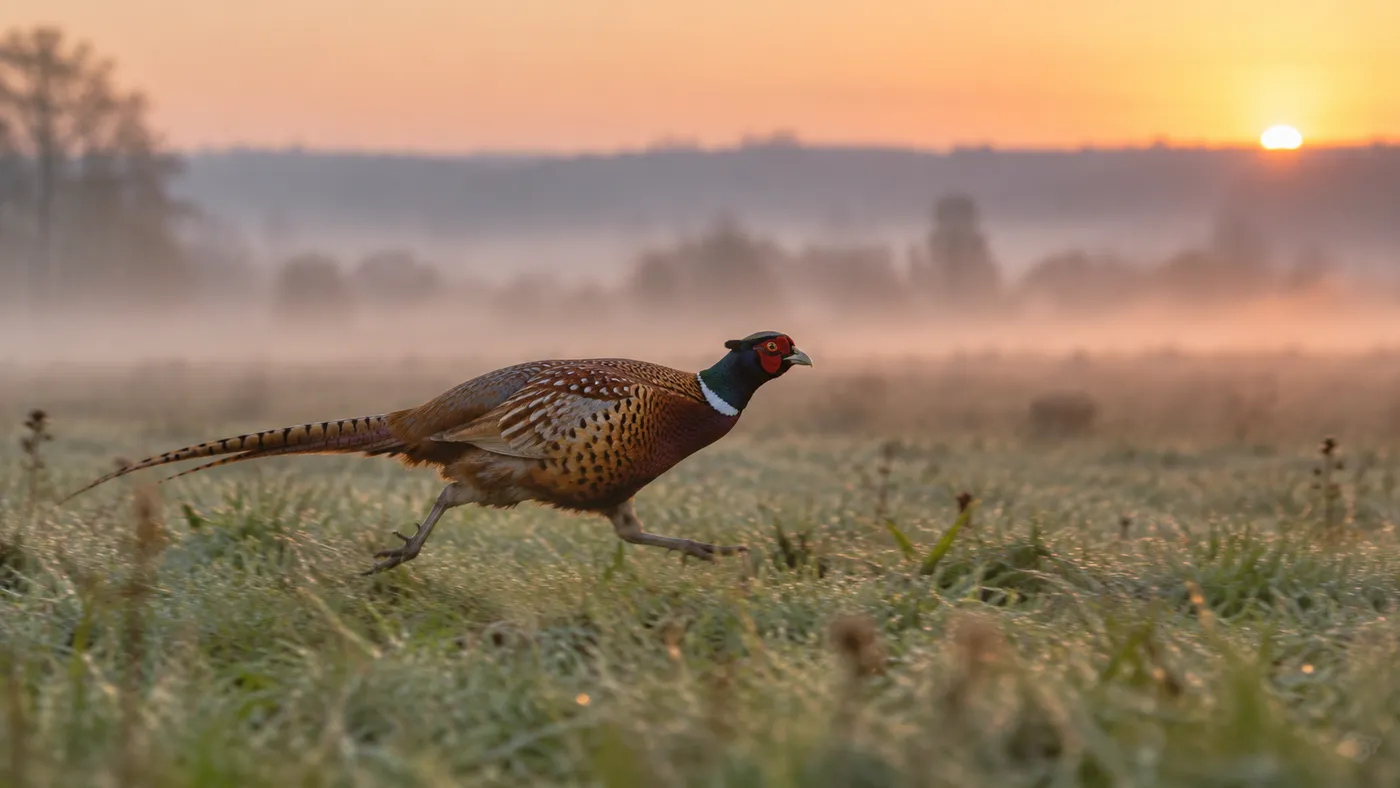
To understand how the animal lived, researchers compared its leg proportions with those of hundreds of modern bird species. The result was clear: Yuezhuornis most closely resembled ground-dwelling, running birds. It was not especially adapted for living in trees or wading through wetlands. It was probably a small terrestrial carnivore that hunted while running — or, as the researchers put it, something like a carnivorous pheasant with killer claws.
Min Wang, a paleontologist at the Chinese Academy of Sciences who led the study, says Yuezhuornis may even have competed with small predatory dinosaurs for the same prey.
Flight Was Not a One-Way Street
Researchers regard Yuezhuornis as the earliest known example of flight loss in bird evolution. This suggests that after flight evolved in the avian lineage, some branches may have abandoned it again surprisingly early.
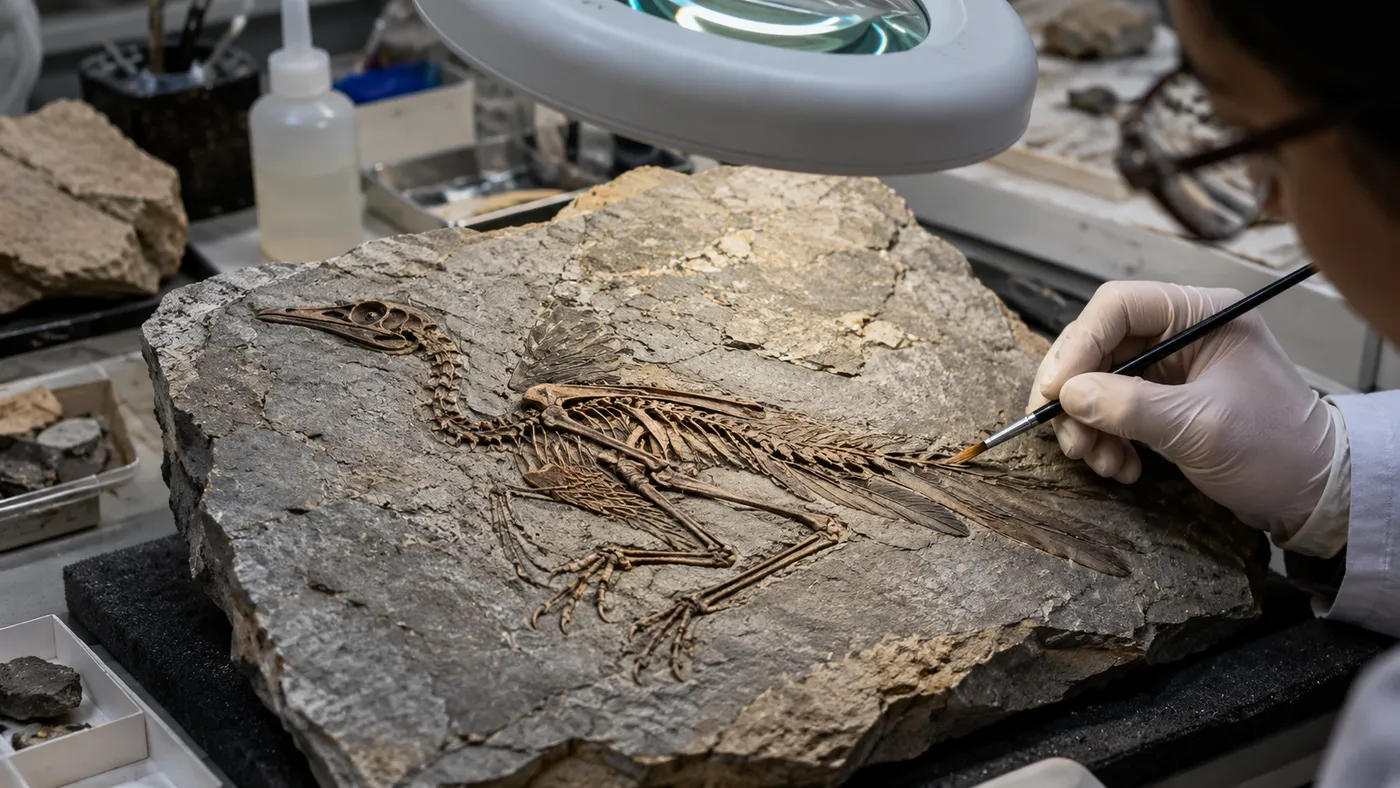
The fossil challenges a long-standing idea about bird evolution. According to that traditional view, the bodies of the earliest birds were shaped almost entirely by the demands of flight: lighter skeletons, larger wings and animals that gradually became better and better at flying.
According to Min Wang, Yuezhuornis challenges that conventional picture. The discovery suggests that Jurassic birds were not systematically progressing toward improved flight. Some were adapting to entirely different ways of life. Wang says the fossil changes our assumptions about what a Jurassic bird could look like.
Even more interesting is Yuezhuornis's position on the evolutionary tree. According to the researchers' analysis, this flightless bird appears slightly closer to modern birds than Archaeopteryx does. In other words, even at a very early stage of bird evolution, there was no single linear path toward increasingly capable flight. Some lineages were already adapting to a terrestrial lifestyle.
"It Raises More Questions Than Answers"
Steve Brusatte, a paleontologist at the University of Edinburgh who was not involved in the study, describes the fossil as one of those discoveries that raises more questions than it answers. According to Brusatte, Yuezhuornis really does appear to belong to the evolutionary lineage of birds, making it both one of the oldest birds in the fossil record and one of the most primitive on the family tree. But as Brusatte also emphasizes, it is a very strange bird.
That strangeness matters. The boundary between birds and dinosaurs may have been far blurrier than we tend to imagine today. In Wang's words, the morphological gap between birds and dinosaurs may have been much smaller than we once thought.
The Story of Birds Is Being Rewritten
For many years, Archaeopteryx was almost the sole protagonist in the story of the earliest birds. That made it easy to imagine early birds according to a single template: small, feathered, winged animals trying to fly.
But as more fossils from the same period as Archaeopteryx are discovered, it is becoming clear that Jurassic bird life was far more crowded and diverse. Some early birds, such as Archaeopteryx, had wings suited for flight. Yuezhuornis, by contrast, had short wings and strong terrestrial adaptations that suited life on the ground.
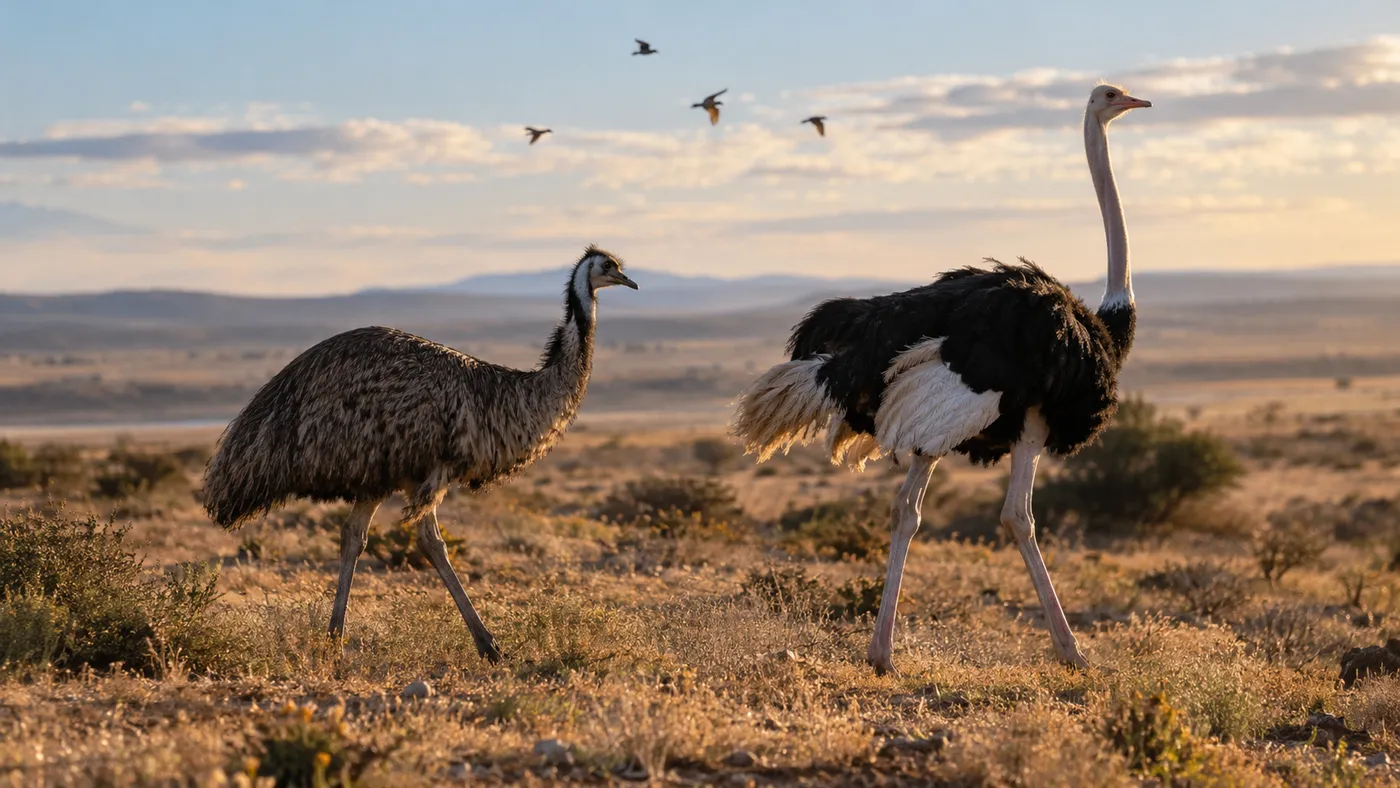
The situation is not so different today. Flightless birds such as ostriches, emus and kiwis already show that flying is not the only successful way to be a bird. Yuezhuornis suggests that this diversity stretches all the way back to the earliest chapters of bird evolution: even at the very beginning of their history, birds were already following different ecological paths rather than being tied to a single way of life.
TagsBiology
Related posts
All postsSpotted on Instagram, Found by Satellite, Discovered at Midnight: A New Giant Waterlily Species
Life's "Universal" Language Isn't as Universal as We Thought: An Organism Found in a Pond Broke the Rule
Nikon Disqualified the Winner of Its Microscopy Competition Over AI. But the Line Isn't as Clear as It Seems