
AMD Hasn't Forgotten Its Older GPUs: FSR 4.1 Officially Arrives on the RX 6000 Series
With the Adrenalin 26.10.1 driver, AMD's AI-based FSR 4.1 upscaling reaches the 2020 RX 6000 series months ahead of schedule. Who can use it, what does it cost in performance, and how do you turn it on?
What has changed?
According to AMD's release notes for the Adrenalin 26.10.1 driver, FSR Upscaling 4.1 support is coming to the following products:
- Radeon RX 6000 series graphics cards: According to AMD's compatibility list, this includes the RX 6900, 6800, 6700, 6600, 6500, and 6400 series.
- Selected Ryzen AI processors: The Ryzen AI Max 300 and 400 series, along with the Ryzen AI 9 300 and 400 series. These laptop processors feature integrated Radeon graphics.
AMD had originally planned to bring RX 6000 support in early 2027. The RX 7000 series received FSR 4.1 in July 2026. With this update, AMD is extending its AI-based upscaling technology to another generation of existing graphics cards.
The driver also adds support for Call of Duty: Modern Warfare 4, Star Wars: Galactic Racer, and Final Fantasy Resonance, while fixing stuttering issues in Modern Warfare 4 on RX 6000 and newer GPUs.
Why does FSR 4 matter?
Upscaling technologies render a game at a lower resolution and then reconstruct the image at a higher resolution to improve frame rates. We've explained how these technologies work, and what the "Quality," "Balanced," and "Performance" settings in game menus actually mean, in our DLSS, FSR, and XeSS upscaling guide.
AMD's previous technology, FSR 3, reconstructed images using hand-crafted algorithms. FSR 4, by contrast, uses an AI model similar in principle to Nvidia's DLSS, potentially delivering cleaner images, especially in fine details and scenes with movement. Until now, RX 6000 owners could use AMD's non-machine-learning FSR 3.1 upscaling; they can now officially use this more advanced model.
How does it work on a GPU without dedicated AI cores?
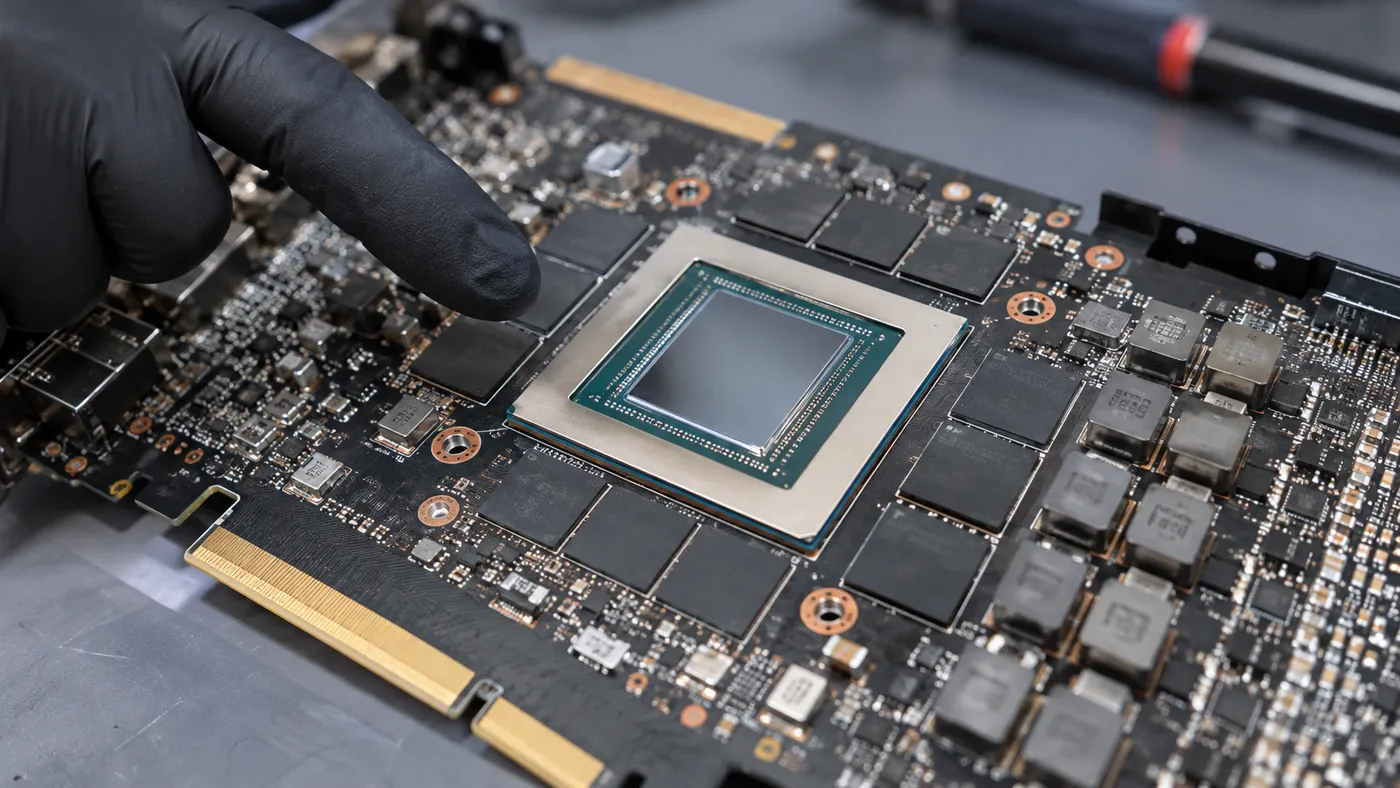
This is where things get interesting. RX 6000 GPUs lack dedicated hardware for AI calculations, so the FSR 4.1 AI model runs on the cards' regular graphics processing units. According to AMD, support for the RX 6000 series was made possible by optimizing the model developed for the RX 7000 series, which uses low-precision calculations known as INT8. An additional, more efficient model was developed for handheld gaming devices and certain laptop processors.
This is similar to what the HelixSR tool we covered last week does: it also runs Nvidia's DLSS model on AMD GPUs' regular compute hardware. The difference is that FSR 4.1 is an official, supported solution from AMD itself.
But there may be a trade-off. When upscaling runs on regular GPU compute resources instead of dedicated hardware, the process consumes some of the GPU's available processing power. AMD did not provide RX 6000 performance figures in its release notes, but early results have started to emerge. In a brief test using an RX 6900 XT in Cyberpunk 2077, Tom's Hardware reported a performance cost of approximately 13% when using FSR 4.1 at 4K resolution in Balanced mode. In other words, better image quality can come at the expense of some frames per second. However, this result covers just one graphics card and one game. Broader testing is still needed to see how things change on less powerful models such as the RX 6600 and RX 6400.
Who can use it, and who can't?
- RX 6000 desktop graphics cards: You can use FSR 4.1 by installing the Adrenalin 26.10.1 driver.
- Laptops with Ryzen AI Max and Ryzen AI 9 processors: Support is being added through the same driver.
- Handheld gaming PCs: AMD has also announced upcoming support for handhelds powered by the Ryzen Z2 A, Z2 Extreme, and Ryzen AI Z2 Extreme processors. On devices such as the ASUS ROG Xbox Ally, FSR 4.1 will arrive through drivers provided by the device manufacturers.
- Xbox Series X and Series S: AMD also announced on the same day that FSR 4.1 is coming to these consoles.
- RX 5000 series: These cards are not included in this update. Their owners can continue using existing technologies such as FSR 2 and FSR 3. Unofficial tools such as HelixSR are also available for those who want to experiment with AI-powered upscaling.
One more thing: bringing FSR 4.1 upscaling to the RX 6000 series does not mean every new AI feature from AMD will work on these cards. AMD's compatibility chart treats upscaling separately from its other new machine-learning features.
How to enable FSR 4.1
According to AMD's guide, there are two ways:
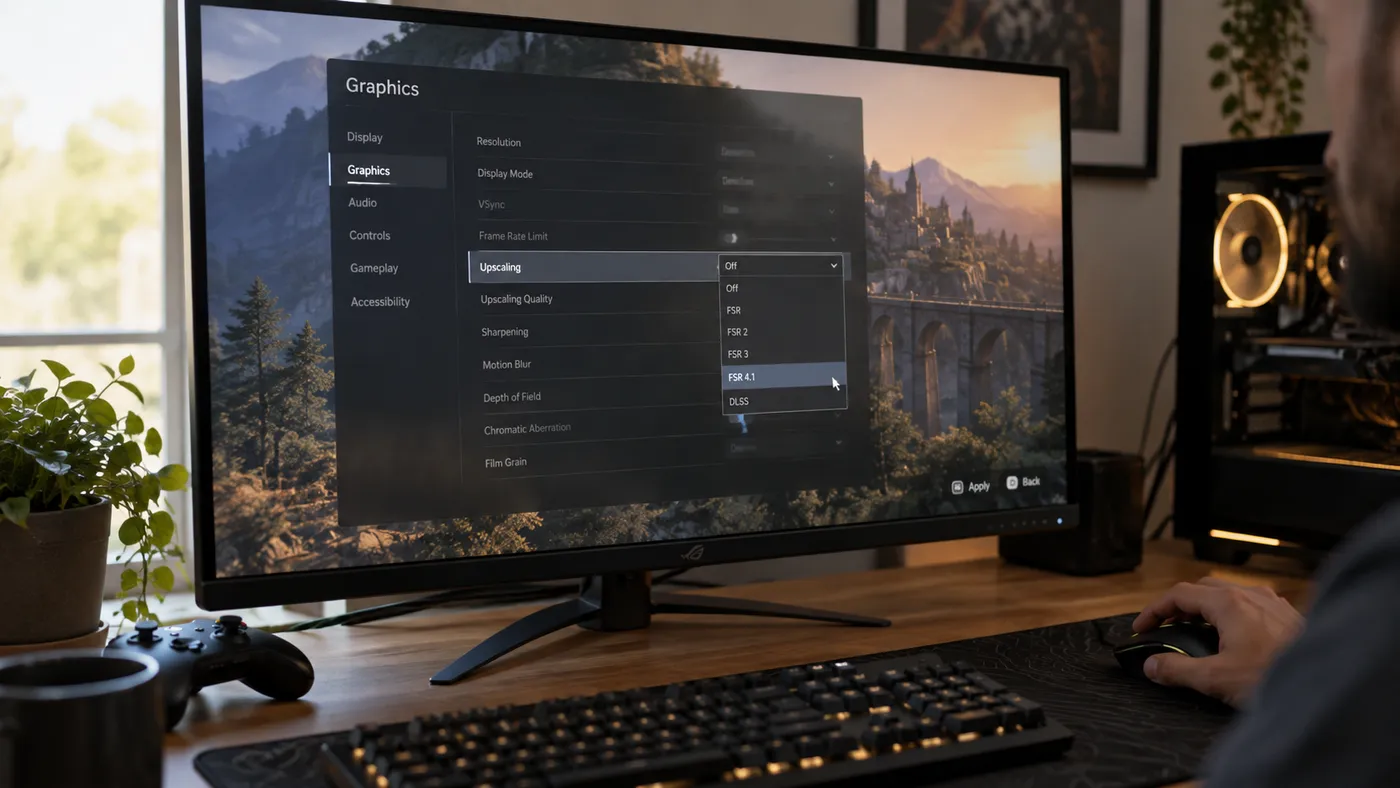
- Through the game's settings: Some games let you select FSR 4 or FSR 4.1 directly in their graphics menus.
- Through the Adrenalin software: If you don't see that option in the game, you can enable "AMD FSR Upscaling" in the AMD Adrenalin software and select FSR 3.1 in the game. The driver then uses the game's existing FSR 3.1 integration to activate FSR 4.1.
Not seeing an "FSR 4.1" option in the game's menu doesn't necessarily mean you can't use it. However, the game must either support FSR 4 or 4.1 directly, or have a compatible FSR 3.1 or newer integration that can be upgraded through the driver.
What should you do?
If you have an RX 6000 card, there's a good reason to install Adrenalin 26.10.1. Then, in a supported game, enable FSR 4.1 using one of the methods above and compare both image quality and frame rates with your previous FSR 3 settings. As early tests suggest, you may have to trade some performance for better visuals. Results will vary by card, especially given the large performance gap between a powerful RX 6900 and an entry-level RX 6400.
This update is also a reminder that a graphics card's value isn't determined solely on the day you buy it. A GPU generation that debuted in 2020 gaining access to a new technology six years later is a small but meaningful win for the millions of players still gaming on older hardware.